
5 Days Tour From Marrakech to Fes via Sahara Desert (Merzouga Route)
A 5 Days Tour From Marrakech to Fes via Sahara Desert is one of the most iconic ways to see Morocco because it connects the country’s most dramatic landscapes in a single, well-paced route. Instead of rushing across the map, you travel step by step from the red city of Marrakech, over the High Atlas Mountains, into ancient kasbah country, through deep canyons and oasis valleys, and finally to the golden dunes of Erg Chebbi for a night under the stars before ending in the cultural capital of Fes.
Even more importantly, this itinerary is built around what many travelers want most: Authentic Morocco Travel Experiences that feel real, not staged. Along the way, you can meet locals in mount ain villages, explore UNESCO-listed architecture, taste regional dishes that change from one valley to the next, and slow down enough to actually enjoy the Sahara rather than just “see it.” Whether you’re comparing Marrakech desert tours with other routes or searching for the best Morocco tours for a first trip, this 5-day plan is a strong balance of comfort, scenery, and adventure.
Tour overview: what this 5-day route includes (and why it works)
This tour is designed to be a complete cross-country journey that includes Morocco’s headline experiences without feeling like a constant road trip. You start in Marrakech and cross the High Atlas via the Tizi n’Tichka pass, visit Aït Benhaddou, continue through the Rose Valley and Dades region, reach Todra Gorge, and then head to Merzouga for an Erg Chebbi camel trek and desert camp night. Finally, you drive north through the Ziz Valley, pass Midelt, stop near Azrou’s cedar forests, and arrive in Fes, where the medieval medina feels like a world of its own.
Compared with shorter Sahara desert tours from Marrakech (like 2 or 3 days), this 5-day version is simply more enjoyable because you have time to stop, walk, and explore instead of only taking photos from roadside viewpoints. It’s also a flexible foundation for tailor made Morocco tours because you can upgrade the desert camp, add guided city tours, or adjust the pace for families. As a result, it works equally well for Morocco Family Tours, couples, friends, and also curated Small Group Morocco Tours focused on culture and scenery.
Tours From Marrakech :
Who this itinerary is best for (private, family, or small group)
If you want comfort and control, a private driver-guide setup is often the easiest choice because it keeps the journey smooth and reduces decision fatigue. In that case, the tour becomes one of the most practical custom Morocco tours you can book: you decide your stops, your hotel style, and your timing, while still following the most scenic route. This is especially helpful if you’re traveling with children, older relatives, or anyone who benefits from shorter driving blocks and more breaks.
On the other hand, if you like meeting other travelers, look for Morocco Small Group Tours or well-reviewed morocco group tours that cap the group size and use comfortable vehicles. When the group is small and the guide is strong, you often get the best of both worlds: social energy plus flexibility, which is why travelers often search specifically for Authentic Small Group Morocco Tours that prioritize local experiences, not just transport. Either way, the itinerary itself remains the same, so you can choose the travel style that fits your budget and personality.
Best time to do this Marrakech–Merzouga–Fes desert trip
Spring (March to May) and autumn (September to November) are typically the best seasons for a Sahara itinerary because daytime temperatures are comfortable and the light for photography is stunning. During these months, the Atlas landscapes are greener, the valleys feel alive, and the desert evenings are cool enough to enjoy a campfire without feeling exhausted by heat. Consequently, this is when most travelers book Marrakech desert tours and longer Morocco adventure tours that include hiking, canyon stops, or extra desert activities.
That said, winter can also be surprisingly good for this route if you pack properly, because the desert nights are cold but the days are pleasant and the roads are often quieter. Summer is still possible, but it requires smarter scheduling, stronger air conditioning, and often upgraded accommodation, especially in Merzouga. Therefore, if you’re planning July or August, it’s wise to treat this as a more premium version of the trip with early starts, shaded stops, and possibly a shorter camel ride depending on conditions.
Day 1: Marrakech → High Atlas → Aït Benhaddou → Dades Valley
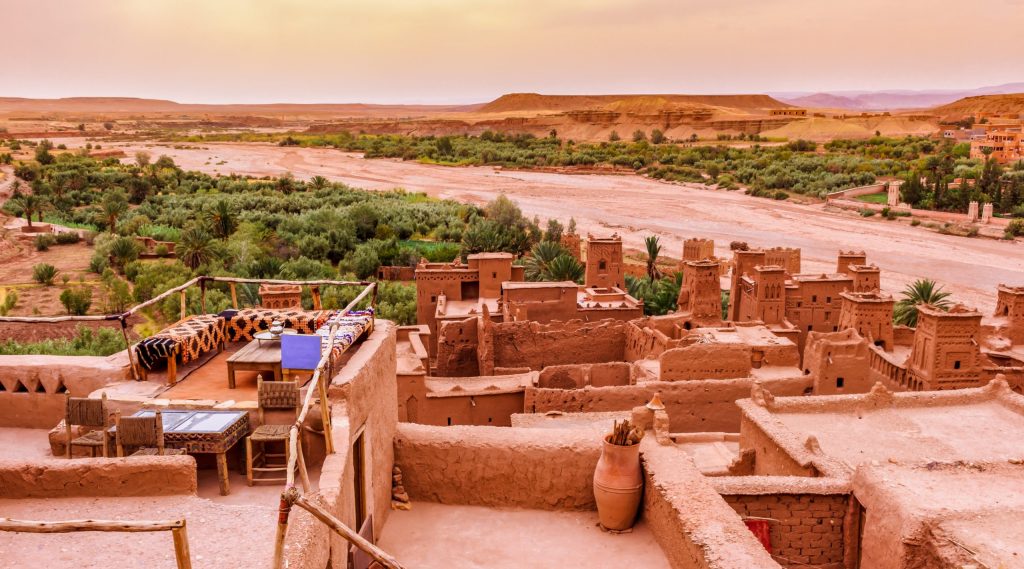
Day 1 is where you feel Morocco changing fast as the city fades behind you and the road climbs into the High Atlas Mountains. After leaving Marrakech, you cross the famous Tizi n’Tichka pass, where panoramic viewpoints show deep valleys and rugged peaks that look almost unreal in clear weather. Soon after, you reach the kasbah region around Ouarzazate and the UNESCO site of Aït Benhaddou, which is one of the most photogenic places in the country thanks to its earth-toned architecture and cinematic history.
After lunch and a walk through the ksar, you continue east into the Valley of Roses and the Dades region, where the landscape becomes dramatic and sculpted. Depending on timing, you can stop for short viewpoint walks and take in the winding “monkey fingers” rock formations near Dades. By evening, you arrive at your guesthouse or hotel in the Dades Valley area, which sets you up perfectly for an easier drive to the desert the next day.
Day 2: Dades → Todra Gorge → Erfoud/Rissani → Merzouga → Camel trek
On Day 2, the scenery shifts again as you travel from valley roads into canyon country, with Todra Gorge as the star stop. The towering rock walls and palm-lined riverbed make it one of the most refreshing breaks of the whole route, especially if you take time to walk a section of the gorge instead of only stopping for photos. After that, the landscape becomes more open and desert-like, and you begin to feel the Sahara approaching as towns like Erfoud and Rissani appear as gateways to the dunes.
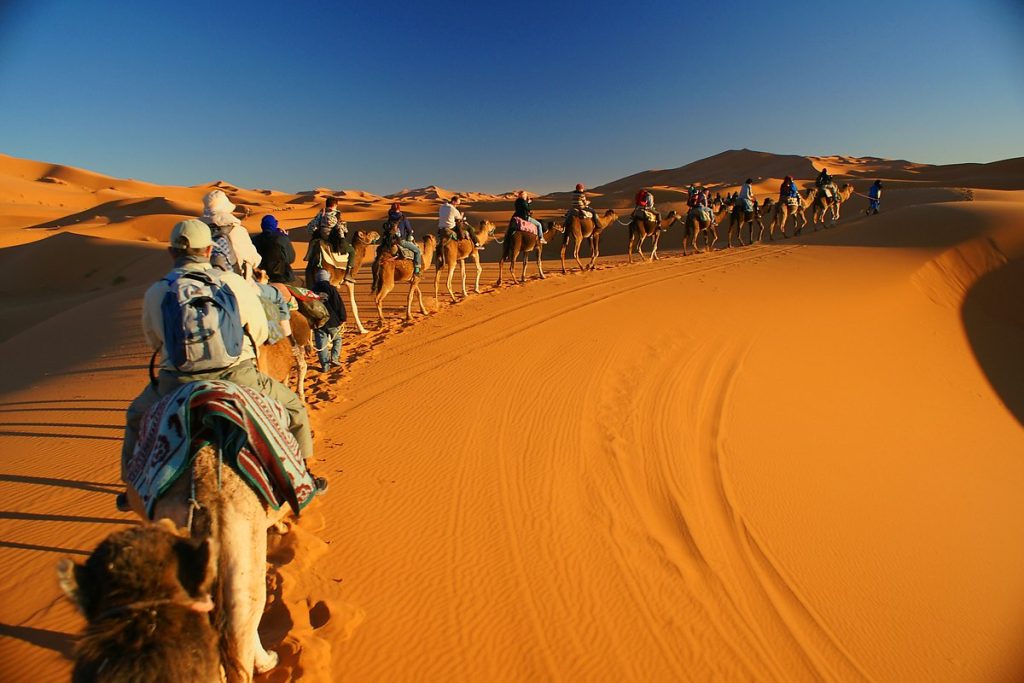
Later in the afternoon, you arrive in Merzouga near Erg Chebbi, where the dunes rise like a sea of sand. This is usually when your camel trek begins, timed for softer light and a more comfortable temperature. As you ride toward camp, the dunes change color from gold to orange to deep amber, and the silence becomes part of the experience. By night, you reach your desert camp for dinner, Berber music, and stargazing, which is often the emotional highlight of the entire 5-day tour.
Day 3: Merzouga & Erg Chebbi: sunrise, dunes, villages, and desert culture
Day 3 gives you the time that shorter trips don’t: time to actually experience Merzouga beyond a single night. Most travelers wake early for sunrise on the dunes, because the light and the calm atmosphere feel almost cinematic. After breakfast, you can choose how active you want the day to be, from relaxed dune walks to a 4×4 loop around Erg Chebbi that includes desert viewpoints, small settlements, and insights into local life in the Sahara region.
In addition, this is the best day to add optional activities without breaking the itinerary. Some travelers choose sandboarding, while others prefer a cultural visit to a local music setting in the Khamlia area, or a tea stop with desert families depending on what’s respectful and available through your guide. If you want more adrenaline, you can also plan a responsible, guided quad or buggy session in designated areas, which fits nicely into broader Morocco adventure tours while still keeping the day balanced. Ultimately, Day 3 is what turns a “drive to the desert” into a true Sahara experience.
Day 4: Merzouga → Ziz Valley → Midelt → Cedar Forest → Ifrane → Fes
Day 4 is the longest driving day, yet it’s far from boring because the landscapes keep changing as you move north. After leaving Merzouga, you pass through the Ziz Valley, where palm groves and fortified villages create a ribbon of green in a rocky environment. Midelt is often a practical lunch stop, and it also breaks the journey into manageable sections so you don’t feel like you’re simply “in transit” all day.
As you continue, you enter the Middle Atlas region, which surprises many first-time visitors because it looks more like a European forest landscape than a desert country. If conditions allow, you can stop near Azrou’s cedar forest area, and then continue to Ifrane, which is known for its clean streets, alpine architecture, and cool climate. By late afternoon or early evening, you arrive in Fes and check into your riad or hotel, which feels like a rewarding finish after the desert and mountain roads.
Day 5: Fes discovery day (medina, crafts, history) + tour finish
Day 5 is where the trip shifts from landscapes to culture, because Fes is often considered Morocco’s most historically dense city. With a local guide, you can explore the medina’s key highlights, such as traditional craft quarters, historic religious schools (viewed respectfully), and panoramic viewpoints that reveal how vast and layered the old city truly is. Compared to the open spaces of the Sahara, the medina feels like an intricate maze of stories, sounds, and artisanal work.
After that, you can tailor the final hours based on your departure plan, which is why this format fits both structured and tailor made Morocco tours. Some travelers prefer a calmer afternoon with rooftop tea and shopping time, while others want to add nearby stops outside the medina for viewpoints and modern-city context. In any case, ending in Fes gives your itinerary a strong cultural finish and also positions you well for onward travel to Chefchaouen, Tangier, Rabat, or Casablanca.
Accommodation choices: standard vs luxury desert camp and riads
Where you sleep on this route matters because accommodation is part of the experience, especially in the Sahara. In the valleys and in Fes, many travelers choose boutique riads or charming guesthouses that feel personal and locally rooted. This not only improves comfort, but it also deepens the trip into Authentic Morocco Travel Experiences, because the architecture, hospitality, and meals are usually more traditional than large chain hotels.
In Merzouga, you typically choose between standard and luxury desert camps. Standard camps can still be comfortable, but luxury camps generally offer better bedding, private bathrooms, and a quieter layout, which can make a big difference after long driving days. If you’re traveling as a couple or for a special occasion, upgrading is often worth it, while families may prioritize private tents and reliable facilities. Because of that, many custom Morocco tours build the camp level around traveler preferences rather than treating it as a fixed, one-size product.
What’s usually included (and what to confirm before booking)
Most operators include private transport or shared transport (depending on whether you book private or group), accommodation for four nights, some dinners and breakfasts, and the camel trek with the desert camp night. However, inclusions vary widely, so it’s important to confirm details like room type, camp bathroom setup, and whether lunch stops are flexible. This matters even more for Small Group Morocco Tours, because group pricing sometimes excludes items that private tours include.
In addition, confirm who your guide is on each portion of the route, because sometimes the driver is also the guide, while other times you add local guides in Marrakech or Fes. You should also ask about luggage logistics for the camel trek, since many camps transport bags by 4×4 while you ride camels with a small daypack. Finally, check cancellation terms and seasonal road considerations in the Atlas, especially during winter when weather can affect mountain driving times.
Practical packing tips: what to wear, what to carry, and what to skip
Packing smartly will make this route feel easier, because you’ll experience several climates in five days. In general, bring light layers for daytime, a warm layer for desert nights, comfortable walking shoes for the kasbahs and gorges, and sun protection for the Sahara. If you’re doing your tour in winter or shoulder season, a packable down jacket or warm fleece is extremely useful, while summer travelers should focus on breathable fabrics and hydration strategies.
At the same time, don’t overpack, because moving bags daily can slow you down. A small daypack for water, sunscreen, camera gear, and snacks is essential, and a headlamp or phone flashlight is useful for camp evenings. If you’re sensitive to dust, a scarf can help in windy dune conditions, and earplugs can help light sleepers in shared camps. Overall, the goal is comfort and flexibility rather than carrying too many “just in case” items.
Budget guidance: what influences price on Marrakech to Fes Sahara tours
Prices for this itinerary depend mainly on the travel style: private tours cost more than shared ones, and luxury camps cost more than standard camps. Seasonality also plays a major role, because spring and autumn are the highest-demand periods for Sahara desert tours from Marrakech and also for Morocco Family Tours. Additionally, the quality of accommodation in Dades, Merzouga, and Fes impacts the price more than many travelers expect, especially if you choose boutique riads and higher-end desert tents.
Furthermore, group size affects value in different ways. Some travelers prefer morocco group tours for lower costs, while others find that small groups offer better comfort and less waiting time at stops. If you are comparing options, look closely at what the price includes, because a cheap tour that excludes key items can become expensive once you add meals, local guides, and upgrades. Ultimately, the best value is the option that matches your pace and priorities, not just the lowest price on paper.
How to make it more authentic: small cultural choices that matter
To create truly Authentic Morocco Travel Experiences, focus on how you travel, not only where you go. For example, spending an extra 20 minutes walking in Todra Gorge, stopping for tea in a quiet valley viewpoint, or choosing a family-run guesthouse can make the trip feel personal. Similarly, asking your driver-guide about local products—like rose water in the Rose Valley or dates near Erfoud—often leads to more meaningful stops than generic “tourist shopping” detours.
Also, authenticity is closely linked to respect and sustainability. Choose experiences that feel transparent and fair, and avoid staged interactions that make communities feel like attractions. If you want the social benefits of group travel without losing depth, choose Authentic Small Group Morocco Tours that clearly describe where they stop and why. In the desert, select camps that manage waste responsibly and treat animals well, because ethical operations protect the very landscapes and livelihoods that make the Sahara special.
Where to go in Morocco after this tour (and how to connect other routes)
If you’re wondering Where to Go in Morocco after finishing in Fes, you have several strong options depending on your time. Chefchaouen is a common next stop for relaxed mountain scenery and photography-friendly streets, while Tangier is ideal if you want a coastal city with international connections. From there, you can explore Desert Tours from Tangier in reverse direction on a longer itinerary, or you can head toward Rabat and Casablanca for a more urban, coastal finish.
Likewise, if your overall trip includes Casablanca, you can connect this itinerary to Casablanca desert tours or to broader Sahara Tours from Casablanca that either start or end on the Atlantic coast. Meanwhile, travelers who want the desert but start in the north often search for Morocco desert tours from Fes, which use a similar Merzouga core but run in the opposite direction. Finally, if you have more time, this 5-day plan can be a “middle chapter” inside a longer 3 weeks in Morocco itinerary, where you add Essaouira, the High Atlas, Chefchaouen, and extra days in Marrakech and Fes.
Marrakech to Fes vs Fes to Marrakech: how to choose direction
The route works in both directions, so the “best” choice usually depends on flights, time, and how you want the trip to build emotionally. Marrakech to Fes often feels like a journey from high energy to deep culture: Marrakech is intense and colorful, the road provides scenic relief, the Sahara adds a once-in-a-lifetime highlight, and then Fes delivers a grand historical finale. For many travelers, this feels like a natural storyline, especially on a first visit.
Conversely, Fes to Marrakech is ideal if you want to start with history and finish with nightlife, shopping, and a more resort-like range of day trips. Because of that, tour companies often promote both Fes desert tours and Marrakech-based options under the umbrella of “Morocco desert tours,” even when the day-by-day structure is nearly identical. Therefore, rather than overthinking the direction, choose the start city that fits your arrival logistics and the end city that best matches your travel mood.