

Ultimate One Week Morocco Itinerary: The Perfect 7-Day Travel Guide
A One Week Morocco Itinerary can feel tricky because Morocco is packed with must-see places, and distances look deceptively short on a map. However, if you choose a smart route and keep your expectations realistic, 7 days is enough to combine imperial cities, mountain scenery, and even the Sahara in a way that still feels enjoyable. This guide gives you a complete, coherent plan that works for first-time travelers, returning visitors, and anyone who wants a balanced mix of culture, landscapes, and local moments.
At the same time, this is not a “run-and-gun” schedule designed only for photos. Instead, it’s built around Authentic Morocco Travel Experiences—traditional riads, scenic stops that match the geography, and daily pacing that reduces stress. Whether you’re planning privately, comparing Morocco Small Group Tours, or looking for custom Morocco tours, you can use this itinerary as your base and then personalize it to your style.
How to use this 7-day Morocco route (and who it’s for)
This itinerary is written for travelers who want a complete first taste of Morocco and don’t mind some driving in exchange for variety. In particular, it’s ideal if you want to see the blue streets of Chefchaouen, the cultural depth of Fes, and the once-in-a-lifetime atmosphere of Merzouga and Erg Chebbi. Because the schedule is structured day by day, it’s easy to follow as-is, while still leaving room for small upgrades such as luxury desert camps, private guides, or extra city tours.
Even so, not everyone travels the same way, and that’s exactly why Morocco is perfect for tailor made Morocco tours. If you’re traveling with kids or older family members, you can soften the pace and transform it into a more relaxed version of Morocco Family Tours. Likewise, if you prefer social travel, you can match these stops with Small Group Morocco Tours or well-designed morocco group tours, as long as the group size stays reasonable and the daily driving blocks are comfortable.
Route overview: what you’ll see in one week (classic highlights)
The classic 7-day route starts in Casablanca and finishes in Marrakech (or the reverse), because those two cities have the most convenient flight connections for most travelers. Along the way, you’ll connect Morocco’s northern mountain charm (Chefchaouen), its most historic medina (Fes), and its most famous desert gateway (Merzouga). After the Sahara, you’ll cross valleys and kasbah landscapes before arriving in Marrakech, which delivers energy, markets, and iconic architecture at the end of your week.
In addition, this route connects naturally to popular add-ons, which is helpful if you want to expand later into a 3 weeks in Morocco itinerary. For example, you can continue from Marrakech to Essaouira for the coast, or you can extend north from Fes toward Tangier and even compare options like Desert Tours from Tangier for longer multi-day adventures. As a result, even though the plan is “just one week,” it can become the central chapter of a much bigger Morocco story.

Tours from Morroco :
Day 1 (Casablanca): landmarks, arrival flow, and a gentle start
Start your week in Casablanca with a relaxed arrival day, especially if you’re landing after a long flight. The city is modern and coastal, so it’s a smoother “entry point” than jumping straight into a chaotic medina on day one. If time allows, prioritize the Hassan II Mosque (exterior or guided interior visit depending on opening times), because it’s one of the most impressive structures in the country and a strong introduction to Moroccan craftsmanship.
Afterward, keep the rest of the day simple: a walk along the Corniche, a good seafood meal, and an early night if you’re jet-lagged. If you’re researching Casablanca desert tours for later, this is also a good moment to confirm your transport plan, because many travelers use Casablanca as the starting point for Sahara Tours from Casablanca or for a city-to-desert route that links directly into Fes and Merzouga.
Day 2 (Casablanca → Rabat → Chefchaouen): coastal culture to blue mountain calm
On day two, travel north with a logical cultural stop in Rabat, Morocco’s capital. Rabat is often overlooked, yet it’s clean, walkable, and filled with elegant history, which makes it a perfect “bridge” between Casablanca’s modern vibe and Chefchaouen’s mountain atmosphere. If you have a few hours, focus on Hassan Tower, the Mausoleum of Mohammed V, and the Kasbah of the Udayas, because they give you a compact snapshot of Moroccan history without overwhelming your schedule.
Later, continue into the Rif Mountains to reach Chefchaouen by late afternoon or evening. The blue streets feel slower and more peaceful than bigger cities, so this is where many travelers finally exhale and start enjoying the rhythm of Morocco. If you’re traveling in a group, this is also a day when Authentic Small Group Morocco Tours tend to shine, because a good guide can manage timing, avoid traffic stress, and still deliver that “arrive before sunset” feeling that makes Chefchaouen so memorable.
Day 3 (Chefchaouen → Fes): photography time, then the cultural capital
Give Chefchaouen a calm morning before you leave, because this is one of the rare Moroccan towns where wandering without a plan is the plan. Walk the medina early, when the alleys are quiet and the light is soft, then pause for a mint tea with a view. Even if you’re following a tight schedule, a relaxed Chefchaouen morning makes the rest of the day feel easier, because you’re not starting with stress.
After lunch, drive toward Fes, which is widely considered Morocco’s most historically dense city. Once you arrive, check into a riad inside or near the medina, because location matters in Fes and can dramatically change your experience. If you’re choosing between independent travel and Morocco Small Group Tours, Fes is one place where structure helps, since the medina is complex, and a guided plan can save time while still keeping the experience authentic.
Day 4 (Fes): medina discovery, crafts, and authentic city depth
Dedicate this day to Fes itself, because a one-week itinerary only works if you allow at least one “low-driving” day. With a licensed local guide, you can explore highlights such as traditional artisan quarters, historic madrasas (as permitted), and panoramic viewpoints that show the scale of the old city. While Fes can feel intense, it’s also deeply rewarding, because the craftsmanship and living traditions are not museum displays—they are part of daily life.
In the afternoon, slow down on purpose, because that’s where Fes becomes personal rather than overwhelming. Choose one or two specific interests—food tasting, ceramics, leatherwork (from respectful viewpoints), or a cooking class—rather than trying to see everything. This day also connects naturally to planning Fes desert tours, because the next section of the itinerary will shift from urban culture to landscapes, and Fes is the most logical launch point for Morocco desert tours from Fes into the Sahara.
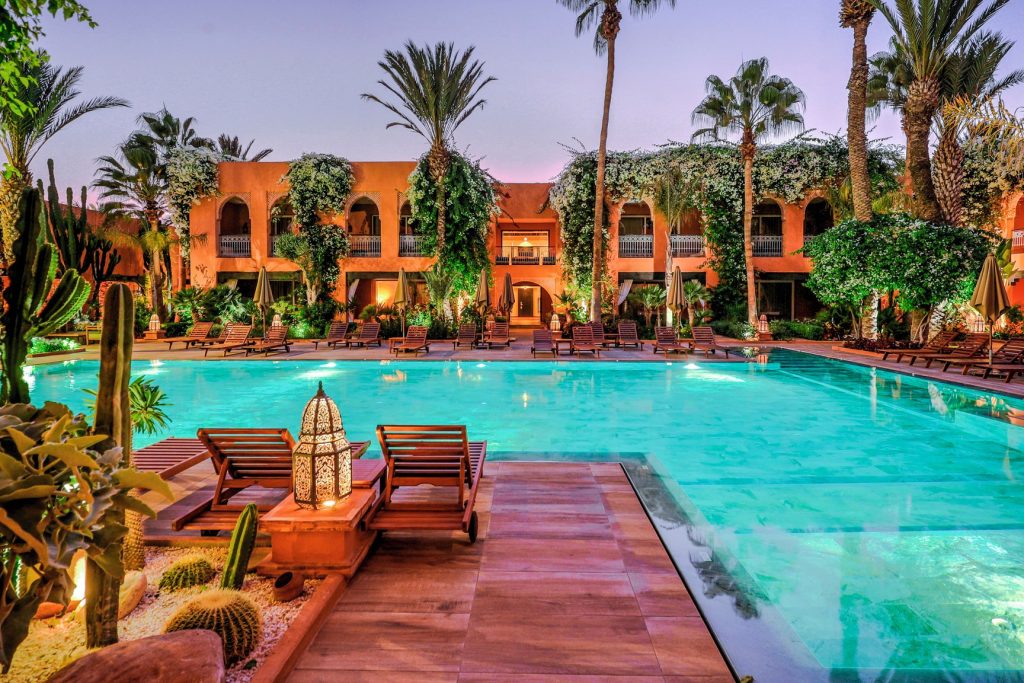
Day 5 (Fes → Midelt → Ziz Valley → Merzouga): the journey into the Sahara
Day five is a travel day, yet it’s a beautiful one because you cross regions that surprise most first-timers. Leaving Fes, you enter the Middle Atlas, where cedar forests and cooler air replace city noise. Depending on timing and conditions, you may stop near Azrou’s cedar areas and then continue toward Midelt, which is often the practical midpoint for a lunch break. The road then shifts again as you begin descending toward the desert side of Morocco, where valleys widen and the air becomes drier.
Later, you pass through the Ziz Valley, a dramatic green ribbon of palm groves and villages that signals you’re approaching the Sahara. By late afternoon, you reach Merzouga, where the dunes of Erg Chebbi rise suddenly like an ocean of sand. This is the heart of many Morocco adventure tours, and it’s also the iconic core of Sahara desert tours from Marrakech—the difference is simply which city you started from, because the desert experience itself is what travelers remember most.
Day 6 (Merzouga → Erg Chebbi → Todra/Dades region): camel trek, camp, and canyon landscapes
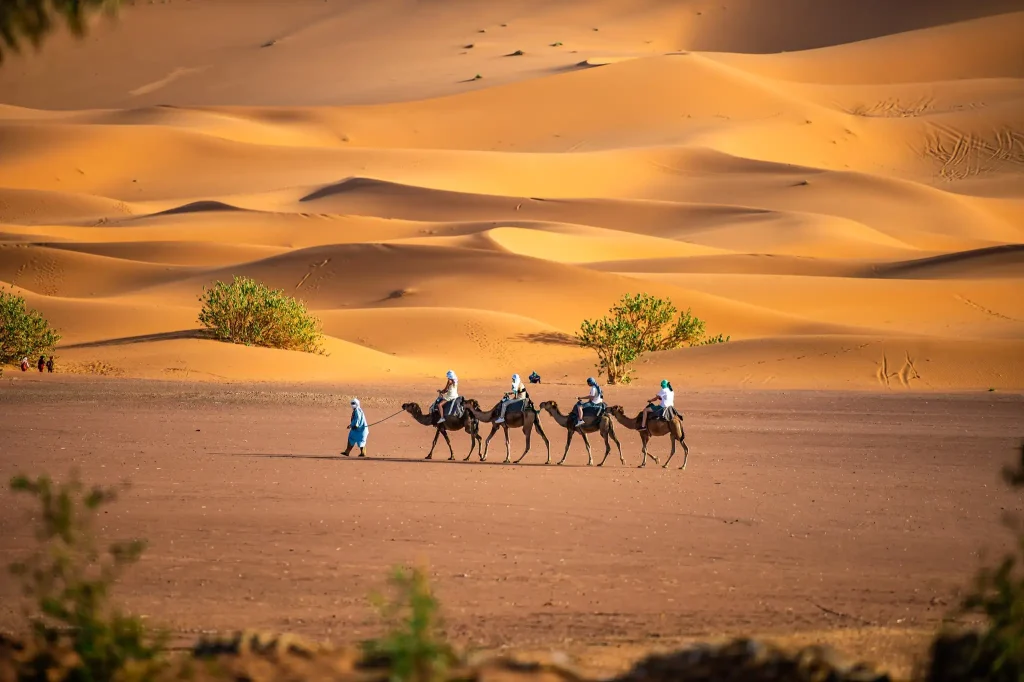
Start day six early so you can enjoy sunrise on the dunes, because it’s one of the simplest moments that feels genuinely unforgettable. After breakfast, many travelers do a camel trek or 4×4 transfer deeper into Erg Chebbi, depending on comfort and mobility. If you’re traveling as a family, you can keep the camel ride short and still get the full desert feeling, which is why this route can be adapted to Morocco Family Tours without losing its magic.
After the desert experience, begin driving west toward the Todra or Dades region for the night, depending on how you want to break up the long south-to-Marrakech stretch. Todra Gorge offers a refreshing walk between towering rock walls, while the Dades Valley gives you cinematic viewpoints and a calmer overnight base. This overnight stop matters, because it transforms what could be an exhausting sprint into a scenic, comfortable continuation—exactly the kind of pacing that makes best Morocco tours feel well designed rather than rushed.
Day 7 (Dades/Todra → Aït Benhaddou → High Atlas → Marrakech): the grand scenic finish
On day seven, continue west through Morocco’s famous kasbah landscapes toward Aït Benhaddou, the UNESCO ksar that appears in countless films and photo essays. The earthen architecture is striking, and a short walk through the site offers one final dose of historic Morocco before you return to city life. If time allows, stop for lunch with a view, because the setting here is part of the experience, and it’s a perfect “final landmark” on a one-week route.
Afterward, cross the High Atlas Mountains via the Tizi n’Tichka pass and arrive in Marrakech by late afternoon or evening. Marrakech is energetic and intense, which is why many travelers like ending here: it feels like a celebration after the silence of the desert and the calm of the valleys. This is also where many travelers compare options for Marrakech desert tours—and in a sense, you’ve already done the best version by experiencing Merzouga as part of a complete north-to-south itinerary.
Where to go in Morocco if you have 1–3 extra days
If you can add just one or two days, the most natural extension from Marrakech is Essaouira, because it provides ocean air, relaxed streets, and an easy contrast to the medinas. Alternatively, you can add an extra Marrakech day for gardens, hammams, and food experiences, which is helpful if you prefer depth over distance. Even small extensions like these make your week feel less like “a checklist” and more like a real vacation.
If, instead, your trip continues north, consider finishing your week in Fes and moving on to Chefchaouen and Tangier afterward. That route connects perfectly with travelers researching Desert Tours from Tangier, because Tangier can be either an endpoint or a starting point for longer Morocco circuits. In other words, Where to Go in Morocco depends on your time and flight plan, but this one-week core itinerary remains a strong backbone either way.
Private travel vs small groups: what works best in 7 days
Private travel is often the easiest choice for a one-week schedule because it protects your time. You can stop when you want, move at your own pace, and avoid delays caused by large groups. This is also the best format if you’re building tailor made Morocco tours, because you can choose your riad style, upgrade your desert camp, and adjust walking time depending on your interests.
On the other hand, well-designed Small Group Morocco Tours can offer excellent value while still feeling personal, especially when group sizes are limited and the itinerary avoids unnecessary detours. If you’re looking at morocco group tours, prioritize the ones described as Authentic Small Group Morocco Tours, because they typically focus more on cultural pacing and less on rushed shopping stops. Ultimately, the best format is the one that matches your energy level, because in a one-week itinerary, comfort and timing matter as much as destinations.
How to make this itinerary more authentic (simple upgrades that matter)
Authenticity in Morocco is often created through small decisions rather than big-ticket upgrades. For example, staying in riads with local character, eating regional dishes instead of international menus, and choosing a desert camp that prioritizes quiet comfort can transform the experience. Even adding one guided food walk in Fes or a calm tea stop in the mountains can turn your route into genuine Authentic Morocco Travel Experiences rather than a generic tour.
It also helps to travel with intention by choosing ethical operators and being respectful in rural areas. If you’re booking custom Morocco tours, communicate clearly that you want fewer forced stops and more scenic or cultural moments, because good operators can adjust accordingly. In the Sahara, choose experiences that treat animals responsibly and manage waste properly, since sustainability is part of what keeps Morocco’s landscapes beautiful for future travelers.
Desert options explained: Marrakech vs Fes vs Casablanca vs Tangier
Many people assume there’s only one way to “do the desert,” but Morocco actually offers several launch points that connect to the same Sahara highlight: Merzouga and Erg Chebbi. If you start in Marrakech, you’ll typically cross Aït Benhaddou, Dades Valley, and Todra Gorge before reaching Merzouga, which is why Sahara desert tours from Marrakech are so popular. If you start in Fes, you’ll more likely pass through cedar forests, Midelt, and the Ziz Valley, which is why Morocco desert tours from Fes often feel greener at the beginning.
If you start from Casablanca, you can combine coast + cities + desert in a broader loop, which is where Casablanca desert tours and Sahara Tours from Casablanca enter the conversation. Meanwhile, northern travelers landing in Tangier often explore Chefchaouen first and then head toward Fes and the desert, which is why Desert Tours from Tangier can be an efficient way to connect the north to the Sahara without backtracking. In short, the dunes are the same—your approach route is what changes the story.
Accommodation strategy: riads, hotels, and desert camps
For a one-week route, choose accommodation that reduces friction rather than adds it. In cities like Fes and Marrakech, staying in a well-located riad saves time because you can walk to key sites instead of battling traffic. Also, riads are part of the Moroccan experience in a way that standard hotels rarely match, which makes them a strong fit for travelers seeking authentic atmosphere.
In the desert, the camp level matters more than most people expect. A “standard” camp can still be memorable, but a “luxury” camp usually offers better bedding, private bathrooms, and quieter spacing between tents, which can improve sleep dramatically. If you’re traveling with children or older relatives, this upgrade often makes the difference between “beautiful but tiring” and “beautiful and comfortable,” which is why many Morocco Family Tours prioritize camp quality.
Transport and timing: what the driving days really feel like
This one-week itinerary includes several long drives, so it’s important to treat the road as part of the experience. Fortunately, Morocco’s scenery changes quickly, and the best routes include valleys, mountain passes, palm oases, and kasbah views that break up the day naturally. When the stops are chosen for geography rather than randomness, the driving becomes a scenic journey instead of a burden.
Still, comfort depends on your vehicle and driver, so choose reliable transport with strong air conditioning and safe driving standards. If you’re booking Morocco Small Group Tours, ask about maximum passengers and vehicle type, because overcrowding turns a scenic route into a tiring one. Likewise, if you’re booking privately, request realistic departure times that avoid arriving late at night, since early arrivals create a calmer, more premium feel.
What to pack for one week in Morocco (without overpacking)
Packing smartly for Morocco is mostly about layers because you’ll experience different climates in a single week. Bring breathable daytime clothing, a warm layer for desert nights and mountain areas, and comfortable shoes for medina walking and short hikes in gorges. Also, sun protection matters everywhere—not just in the Sahara—so pack sunscreen, sunglasses, and something for shade such as a hat or scarf.
At the same time, keep luggage manageable because you’ll move hotels frequently. A small daypack is essential for water, snacks, tissues, and a power bank, and it makes guided medina days much easier. If you plan to ride camels, bring a scarf for wind and dust, and consider a headlamp for camp evenings. These simple items often improve comfort more than extra outfits do.
Best time to do a 7-day Morocco itinerary
Spring (March to May) and autumn (September to November) are generally the most comfortable seasons for a one-week circuit that includes the Sahara. During these months, the temperatures are friendlier for both city walking and desert evenings, and the light for photography is excellent. Because these are peak seasons, it’s wise to book accommodation early, especially in Chefchaouen and in high-quality desert camps.
Winter can also be a great option if you’re prepared for cold desert nights and occasional mountain weather. Meanwhile, summer can be challenging because desert heat may limit daytime activity, so if you travel in July or August, consider upgrading accommodation and planning earlier starts. In every season, the key is pacing: the better you balance early departures with restful evenings, the more your one-week trip feels like a holiday rather than an endurance test.
Budget planning: what affects the total cost most
The biggest cost drivers in a one-week Morocco itinerary are transport style (private vs group), accommodation level (standard vs boutique vs luxury), and the desert camp upgrade. Private tours are usually more expensive, yet they often deliver better time efficiency and comfort, which is why many travelers see them as good value in a short itinerary. Conversely, morocco group tours can lower costs, but quality varies, so it’s important to confirm inclusions and group size.
Food and guides also influence budget more than people expect. For example, adding a guided medina tour in Fes and Marrakech can improve understanding and reduce confusion, while still remaining affordable. If you’re building custom Morocco tours, you can control cost by choosing where to upgrade and where to keep things simple—for instance, upgrading the desert camp while staying in mid-range guesthouses in transit towns.
How this becomes a 3 weeks in Morocco itinerary (easy expansion plan)
If you have more time later, this 7-day route becomes a strong “core chapter” inside a 3 weeks in Morocco itinerary. You can add the coast (Essaouira, Agadir), expand the north (Tangier, Asilah, Tetouan), and include mountain villages or hiking time in the Atlas. You can also slow down the Sahara segment by adding an extra night in Merzouga for deeper dune experiences and cultural stops.
Additionally, longer trips allow you to explore Morocco by theme rather than only by highlights. For example, you can build Morocco adventure tours with trekking, cycling, and longer gorge walks, or you can focus on food, crafts, and traditional hammams across multiple cities. In that sense, the one-week itinerary is your foundation, while the 3-week version is your refined, deeper Morocco experience.
Conclusion: why this one-week plan remains the “perfect” Morocco starter route
This One Week Morocco Itinerary works because it connects Morocco’s most iconic regions in a logical flow: coastal arrival, mountain calm, historic city depth, Sahara magic, and a high-energy finish in Marrakech. While the route includes driving, it rewards you with a complete cross-section of Morocco that many travelers dream of for years. When planned carefully, it feels like a story with chapters, not just destinations.
Whether you travel independently, choose Morocco Small Group Tours, or book tailor made Morocco tours, the key is to protect your pacing and prioritize comfort where it matters most. If you do that, you’ll return home with the feeling that you didn’t just “visit Morocco”—you experienced it. And if you ever come back with more time, this week-long route will make expanding into a longer journey effortless.