
7 Reasons to Choose an Overnight Desert Camp in Morocco: Sahara Stars Camp Experience
An overnight desert camp in Morocco can turn a sightseeing trip into a genuine Sahara experience. Rather than reaching the dunes, taking a few photographs and immediately driving away, you have time to watch the sunset, enjoy the quiet after dark and wake to the first light over the sand. For many visitors, that night becomes one of the most memorable parts of their Morocco holiday.
However, a good camp stay is about more than sleeping in a tent. The route, the season, the camp’s facilities, the quality of the transfer and the amount of time you spend in the desert all shape the experience. This guide explains seven reasons to consider an overnight stay, how to choose a suitable destination and what to check when comparing a Sahara Stars Camp experience with other options.
What does an overnight desert camp in Morocco involve?
A desert-camp stay usually combines a journey to a desert area with an evening and night at a camp. Depending on the location and package, visitors may travel by camel, 4×4 vehicle or another arranged transfer. Some tours include dinner and breakfast, while others may offer music, a sunset stop, stargazing or a sunrise walk. Inclusions vary, so check the details with the operator instead of assuming every camp offers the same facilities.
It is also important to know that “desert camp” can describe different landscapes. Merzouga and Erg Chebbi are known for large sand dunes, while Agafay is a rocky landscape close to Marrakech. Zagora and the wider Mhamid area offer a different southern desert setting, with routes and dune experiences that vary by location. Before booking, make sure the destination matches the scenery and travel time you have in mind.
1. Experience sunset and sunrise in the dunes
The hours around sunset give the desert a completely different character. As the light softens, the dunes shift in colour, shadows lengthen and the surrounding landscape becomes quieter. Staying overnight means you can enjoy this change without having to rush back to a city or complete a long drive immediately afterward. You can take photographs, walk near the camp where permitted, or simply pause and take in the view.
Sunrise is equally special, although it requires an early start. The sand may look cooler and more muted before the sun rises, then gradually warm as the light spreads across the dunes. Because you are already staying nearby, you can reach a suitable viewpoint more easily than a day visitor. Weather, season and the camp’s location affect the view, so ask the operator where the camp is situated and how sunrise access is arranged.
2. Spend a night beneath a wide desert sky
Away from bright city lights, the night sky can feel exceptionally open. On a clear evening, visitors may see many stars, and the quiet makes it easier to notice the sounds of the desert and the atmosphere around the camp. Stargazing does not require specialist equipment; a short walk to a safe, permitted spot or time outside your tent may be enough to make the evening memorable.
Conditions are not guaranteed, of course. Clouds, moonlight, dust and nearby lighting can affect how many stars are visible. Even so, an overnight stay gives you more opportunity to enjoy the night than a short excursion does. If stargazing is important to you, ask whether the camp limits unnecessary lighting and whether guests can safely spend time outside after dinner.
3. Choose how you reach camp: camel, 4×4 or another transfer
For many travellers, a camel ride is a memorable way to approach a camp in a sandy area. The slower pace gives you time to notice the changing landscape and enjoy the journey as well as the destination. However, camel rides are not essential to having a meaningful desert stay, and ride length and arrangements differ between tours. Ask how long the ride lasts and whether it is included in the price.
A 4×4 transfer may be a better choice for visitors who prefer not to ride, have mobility concerns or are travelling with young children. Some itineraries offer a choice, while others use a particular transfer method based on the camp’s location. Confirm the options before booking, and ask how luggage is carried. That way, you can bring a small day bag for the camp journey while your main bags are transported separately if the operator provides that service.
4. Enjoy local food and hospitality
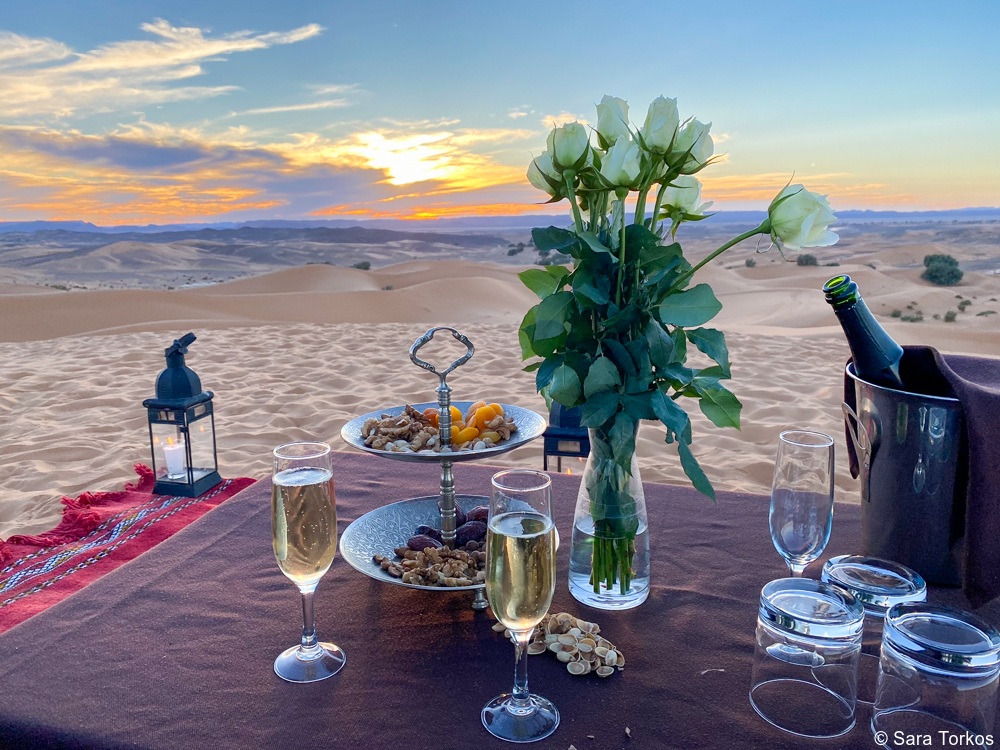
A camp meal can be an enjoyable part of the evening, particularly after a day on the road. Depending on the package, dinner may include familiar Moroccan dishes such as tagine, salads, bread and seasonal sides. Breakfast is often served the following morning. Menus, meal times and dietary options vary, so contact the operator ahead of time if you have allergies or follow a vegetarian, vegan or other specific diet.
The camp experience may also include music, conversation or an introduction to local traditions. These activities differ between providers, and they should not be treated as guaranteed unless they are listed in your booking details. For a more personal visit, choose an operator that explains who provides the experience and how it benefits local people. Thoughtful exchanges can contribute to Authentic Morocco Travel Experiences without turning local culture into a performance.
5. Slow down after the journey
Many desert trips involve several hours of driving, especially when they start in Marrakech or Casablanca. An overnight stay gives you a reason to pause instead of treating the dunes as a quick stop between two long road days. You can settle in, enjoy the evening and spend the next morning at a gentler pace, depending on your itinerary.
This slower rhythm can make a meaningful difference to your overall trip. Rather than arriving, taking a photograph and leaving, you have time to notice the landscape and enjoy a quiet moment away from traffic and busy medinas. If rest is a priority, ask about check-in times, the route to camp and how early you will need to leave the following day. A well-paced itinerary is often more rewarding than one that tries to include too many stops.
6. See the desert landscape change through the evening
The desert is not one unchanging view. Its appearance depends on the light, the weather, the season and where you are staying. A rocky plain, a palm-lined oasis and a field of high dunes each create a different impression. An overnight visit lets you observe some of those changes over several hours rather than seeing the landscape only during a short daytime stop.
Photography enthusiasts may especially appreciate having time for different light conditions. Sunset and dawn are popular, but the blue tones after sunset or the textures of the sand in early morning can also make striking photographs. Remember to be considerate of other guests and local surroundings: avoid shining bright lights into tents, stay within areas where walking is permitted and ask before photographing people.
7. Make the desert a highlight, not just a stop
An overnight camp can become the central memory of a Morocco itinerary because it combines scenery, travel, food and an evening in a distinctive setting. That does not mean every traveller needs a luxury camp or a multi-day desert expedition. It does mean that planning enough time to enjoy the experience can make the journey feel more complete.
The stay can also fit different travel styles. Couples may look for a quieter setting, families may prioritize bathrooms and easy transfers, and active travellers may want dune walks or other activities. When you choose the camp and route around your needs, the visit can become part of custom Morocco tours or tailor made Morocco tours rather than a standard overnight package.
Sahara Stars Camp: what to check before booking
If you are considering the Sahara Stars Camp experience, confirm the current facilities and inclusions directly with the provider. Ask about the camp’s location, tent type, bathroom arrangements, bedding, meals, transfer method and the schedule for arriving and departing. Camp services can change by season or package, so rely on the latest written information rather than a general description or an old photograph.
It is also useful to ask what is not included. For example, a package may exclude lunch, drinks, tips, a particular transfer or an activity that appears in promotional photographs. Request a clear itinerary and cancellation policy before paying. These checks are worthwhile whether you choose Sahara Stars Camp or another provider, because a transparent booking is more likely to match your expectations.
Where should you stay? Merzouga, Zagora, Chegaga or Agafay
Merzouga and Erg Chebbi
Merzouga is a popular base for travellers seeking the large dunes of Erg Chebbi. The region is a common destination for Sahara desert tours from Marrakech and Morocco desert tours from Fes, although the driving route and landscapes differ depending on your starting point. Visitors may arrange a camel ride or vehicle transfer to a camp, but the details depend on the operator and the exact camp location.
Merzouga is relatively far from Marrakech, so the trip usually involves several travel days if you want to experience the route without rushing. Many itineraries include mountain scenery, kasbahs, valleys or gorges along the way. If you have limited time, compare the total hours on the road with the amount of time you will actually spend in the desert. The dunes may be impressive, but the journey is a significant part of the plan.
Zagora and the Mhamid area
Zagora is often considered by visitors who have less time for a southern desert trip. It can offer a desert overnight and a journey through the Atlas and southern Morocco, although the scenery and dune experience differ from Erg Chebbi. Rather than choosing it because a tour is described simply as a “Sahara trip,” check photographs, route details and the location of the camp so you know what kind of landscape to expect.
The Mhamid area can be a starting point for trips towards more remote desert landscapes, including routes that may continue toward Chegaga. These experiences can involve longer or more rugged travel and may have different facilities from camps near larger towns. Ask about vehicle type, journey duration, camp amenities and communication arrangements. If you want a more adventurous trip, make sure the level of remoteness suits your comfort and needs.
Agafay near Marrakech
Agafay is a rocky landscape close to Marrakech. It is convenient for travellers who want a camp-style evening without spending several days travelling to the Sahara. Depending on the package, a visit may include a meal, sunset views and optional activities. Because it is near the city and is not the same landscape as Erg Chebbi’s large dunes, it is best viewed as a nearby desert-style escape rather than a substitute for a deep Sahara journey.
An Agafay overnight can work well at the beginning or end of a city stay, especially if you have only a short time in Morocco. Before booking, verify the camp’s exact location, transport arrangements and facilities. If your dream is to sleep beside large sand dunes, ask specifically whether the itinerary goes to Merzouga or another dune region. Clear expectations help you choose the right experience.
How to reach a desert camp from different Moroccan cities
From Marrakech
Marrakech is one of the most common starting points for desert trips. Marrakech desert tours may head towards Agafay for a short stay or travel farther south toward Zagora, Mhamid or Merzouga. The longer routes usually include scenic stops along the way, but they require careful timing. A one-night Merzouga visit can involve substantial driving, so travellers who want a relaxed experience should consider adding days.
If you are comparing Sahara desert tours from Marrakech, look beyond the headline duration. Check where you sleep on each night, what time the vehicle departs, how long you will spend at the camp and whether the return journey is direct or includes an overnight stop. A good itinerary balances travel with time in the desert; it does not rely on the word “Sahara” alone to explain what the trip includes.
From Fes
Morocco desert tours from Fes often travel through the Middle Atlas and the Ziz Valley before reaching Merzouga. This approach offers a different sequence of landscapes from a Marrakech departure, with mountain and forest scenery before the desert. Fes desert tours may be useful for travellers who are already exploring the northern part of Morocco or who want to finish a city-to-city journey in Marrakech.
As with any long-distance route, check how many nights are included and whether the itinerary allows enough time at the camp. A route from Fes can be a good fit for a one-way itinerary, especially if you do not want to return to your starting city. Ask whether the tour ends in Fes, Marrakech or another destination, and make sure the final drop-off works with your onward transport.
From Casablanca
Casablanca desert tours generally refer to multi-day trips rather than a quick excursion, since the Sahara is far from the Atlantic coast. Sahara Tours from Casablanca may combine Casablanca with Rabat, Fes or Marrakech before or after the desert. This approach can work well for travellers arriving on an international flight who want to see several parts of Morocco on one trip.
Because the distances are considerable, check the itinerary’s overnight stops carefully. A route that includes too many cities in too few days may leave little time to enjoy the camp. If you are starting in Casablanca, ask the operator to show the full route and expected travel times. A well-planned tour will explain how the city visits, road days and desert night fit together.
From Tangier
Desert Tours from Tangier can connect northern Morocco with Fes and the Sahara, often continuing south after a visit to Chefchaouen. They are useful for travellers arriving by ferry or flight in the north who want to travel through the country rather than backtrack. As with the other routes, the desert experience will depend on the destination, itinerary length and camp location.
If you are considering Tangier as your starting point, decide whether you want to finish in Fes, Marrakech or Casablanca. A one-way itinerary can save return travel, but it needs to align with your flights and accommodation bookings. Ask how much time is allocated to the Rif region, Fes and the desert. This helps you understand whether the trip is a relaxed circuit or a fast transfer with sightseeing stops.
A practical four-day Marrakech-to-Merzouga outline
A four-day plan can provide more breathing room than a very short Marrakech-to-Merzouga trip. On the first day, travellers commonly cross the High Atlas and visit Aït Benhaddou before staying in the Dades region or nearby. The exact stops and overnight location depend on the operator, road conditions and season. Confirm that the planned schedule leaves time to explore rather than only drive.
On the second day, the route may continue through Todra Gorge and toward Merzouga. After arrival, guests can transfer to camp by the method included in their booking, enjoy the evening and stay overnight. On the third day, a sunrise view or a relaxed morning may be possible before travelling to another overnight stop. The fourth day can return to Marrakech, depending on the route. This is only a planning example; ask for the exact day-by-day schedule before booking.
Choosing a camp: standard, comfort or luxury
Camp labels such as standard, comfort and luxury are not always used consistently. One provider’s “luxury” tent may have a private bathroom, while another may use the term to describe decor or a package of activities. Instead of relying on a category name, ask specific questions: Is the bathroom ensuite or shared? Is hot water available? What bedding is provided? Is the tent private, and how far is it from shared facilities?
Also consider what matters most to you. Some guests prioritize a private bathroom and a comfortable mattress, while others care more about the camp’s setting, quiet atmosphere or sustainability practices. A more expensive option is not automatically the best fit. Compare written inclusions, recent reviews and clear photographs, and tell the operator about any accessibility, dietary or comfort requirements before you confirm.
Private travel, small groups and family trips
A private tour offers more control over departure times, stops and the pace of the journey. It can be particularly useful for couples, photographers or travellers who want a flexible schedule. It may also make it easier to arrange a shorter camel ride, a 4×4 transfer or extra breaks. However, private travel usually costs more than joining a shared departure, so compare the overall value rather than price alone.
Small Group Morocco Tours can be a good choice if you enjoy travelling with others and want to share transport costs. Before booking, ask for the maximum group size, vehicle type, luggage arrangements and overnight standards. Authentic Small Group Morocco Tours should explain how the itinerary supports meaningful stops and local experiences rather than simply using “small group” as a label. Larger morocco group tours may have different schedules and comfort levels, so read the details carefully.
For Morocco Family Tours, practical details matter even more. Ask about child-appropriate transfer options, family room availability, meal arrangements and the camp’s bathroom facilities. A long camel ride may not suit every child or adult, and families should be able to discuss alternatives with the operator. A realistic route with enough breaks is usually more enjoyable than an itinerary that tries to fit too many activities into one day.
Best time of year for a desert camp overnight
Spring and autumn are popular times for a Sahara visit because daytime temperatures are often more comfortable for travelling and spending time outdoors. The exact weather varies by year and location, however, so check the forecast close to departure. Even during warm seasons, desert evenings can feel cool, while winter nights can be particularly cold. The camp’s heating and bedding arrangements should be confirmed rather than assumed.
Summer trips are possible, but heat can affect the timing of activities and how comfortable a long drive feels. Travellers may benefit from early departures, plenty of water and a camp with suitable facilities. During busy periods, camps and vehicles may book up in advance. If your dates are fixed, reserve early; if your dates are flexible, compare different weeks and ask about expected conditions at your chosen destination.
What to pack for an overnight stay
Pack for a warm day and a potentially cool night. Comfortable walking shoes, breathable clothing, a warm layer, sun protection and a refillable water bottle are useful for most itineraries. A scarf can help protect against dust or wind, while a small day bag keeps essentials close during the transfer to camp. Before leaving, check whether the operator transports your main luggage separately or expects you to carry it.
It is also helpful to bring personal medication, a phone charger or power bank and any small items you need overnight. Do not assume that every camp has the same charging access, connectivity or toiletries. If you use mobility aids or need specific facilities, contact the provider in advance and ask for clear confirmation. Packing thoughtfully makes the stay easier without requiring a large amount of luggage.
Booking checklist: questions to ask before paying
Before you book, request the complete itinerary and check the start and finish times, the overnight locations and the expected driving hours. Ask what is included in the price: transport, meals, transfers, camel riding, accommodation and any local guide services. Confirm the camp’s bathroom arrangement, bedding and room or tent type. If anything is important to you, ask for the answer in writing so there is less room for misunderstanding.
You should also ask about cancellation terms, group size, luggage handling and what happens if weather or road conditions affect the schedule. Find out whether activities are optional and whether there are alternatives for guests who do not want to ride a camel. Finally, read recent reviews that mention specific details—such as communication, cleanliness and timing—rather than relying only on short general ratings.
Budget: what affects the price?
The price of an overnight desert trip varies according to the starting city, trip duration, transport type, accommodation, group size and camp facilities. A private vehicle and a camp with private bathrooms will generally cost more than a shared trip with basic facilities. The season and availability can also affect prices, particularly during popular travel periods.
When comparing offers, check that you are comparing the same inclusions. A lower headline price may exclude meals, transfers or an activity you expected to be part of the package. On the other hand, a higher price is not proof of better quality. Focus on the details you value—comfort, route, camp location and schedule—and choose an option that explains those clearly.
Responsible travel and respect for the desert
A desert environment is sensitive, and tourism choices can affect both the landscape and the people who live in the region. Follow camp guidance about waste, water use and walking routes. Avoid leaving rubbish behind, and do not remove stones, plants or other natural objects as souvenirs. Ask permission before photographing people, homes or community activities, and respect any request not to take a photograph.
If you choose a camel ride, ask how the animals are cared for and whether a vehicle transfer is available as an alternative. Do not assume that every operator follows the same practices. You can also ask how the camp employs local people and sources food or services. Responsible choices help protect the landscape and support the communities that make Authentic Morocco Travel Experiences possible.
What to do after the desert: Where to Go in Morocco next
After a camp night, many travellers continue to Marrakech, Fes or another major stop, while others add a quieter coastal destination. If you are in Marrakech, Essaouira can offer a change of pace after long drives. From Fes, Chefchaouen or Tangier may fit a northern route. Your best next stop depends on your remaining time, transport and departure airport, so avoid adding a destination simply because it appears on a list.
If you are planning a longer holiday, the desert can be one chapter in a broader 3 weeks in Morocco itinerary. You could combine Marrakech, the Sahara, Fes, Chefchaouen and coastal towns, allowing more time for rest and city visits. Travellers interested in best Morocco tours may compare private trips with Morocco Small Group Tours, while those wanting a personal pace can explore custom Morocco tours or tailor made Morocco tours.
Is an overnight camp right for every traveller?
An overnight camp can suit couples, friends, solo travellers and families, but the right option depends on personal comfort and mobility needs. Some people enjoy sleeping in a remote setting, while others prefer a nearby hotel with easier access to facilities. Before booking, consider your sleep preferences, bathroom requirements, transfer method and tolerance for long drives. There is no single camp style that works for everyone.
The stay can also be part of Morocco adventure tours, especially when combined with dune walks or other activities offered by the operator. However, activities should remain optional and appropriate to your needs. If you are travelling with children, older relatives or anyone with a medical condition, discuss the route and camp facilities with the operator before paying. A clear conversation helps you choose an experience that is exciting without being uncomfortable.
Frequently asked questions
Is Merzouga the best place for an overnight desert camp?
Merzouga is a popular choice for visitors who want to see the Erg Chebbi dunes. It offers access to a well-known sandy landscape and can be reached through routes from Marrakech or Fes. Whether it is best for you depends on how much time you have, how much driving you are comfortable with and what type of camp experience you want.
If your schedule is short, a closer option such as Agafay may be more practical, although the landscape is different. Zagora and the Mhamid area also offer other southern itineraries. Compare actual locations and driving times rather than choosing solely by the word “Sahara” in a tour title.
Is a camel ride required to reach camp?
Not necessarily. Some tours include a camel ride, while others may provide a 4×4 transfer or allow guests to select an option. Availability depends on the camp and package, so ask before booking. If you have mobility concerns, are travelling with young children or simply prefer not to ride, explain this to the operator in advance.
If you do choose a camel ride, check its expected duration and ask what to bring. You may need only a small day bag for the ride, while larger luggage is handled separately if the operator offers that service. Do not assume luggage transport is included; confirm it directly.
Is an overnight desert camp comfortable?
Comfort varies by camp. Some tents have private bathrooms and more substantial bedding, while others use shared facilities and simpler arrangements. Temperature, wind, noise and the camp’s location can also affect the night. Ask for specific information about the tent, bathroom, bedding and available services instead of relying only on terms such as “standard” or “luxury.”
If you are a light sleeper, ask about tent spacing, evening activities and lighting. If you need a particular facility, request written confirmation. That helps you judge whether a camp suits your expectations before you commit to the journey.
How many nights should I stay?
One night can be enough to experience a sunset, dinner, a night in camp and a sunrise. However, travellers who want a slower pace may prefer to spend an additional night in the area, especially if their itinerary allows more time for a village visit, a 4×4 excursion or simply resting after the journey.
The right duration depends on the full route. For example, a short trip from Marrakech may already involve long driving days, while a route from Fes has a different pattern. Review the complete itinerary and consider how much time you will actually spend at the camp, not just the number of nights listed.
Can I book an overnight camp as part of a group tour?
Yes. An overnight camp may be included in private itineraries and shared departures. When comparing Small Group Morocco Tours or other group options, check the maximum number of passengers, vehicle comfort, daily schedule and camp facilities. A smaller group may make stops more manageable, but the label alone does not guarantee a particular standard.
If you prefer more control, ask about private transport or a custom itinerary. For travellers who enjoy meeting others, a well-organized group may offer good value. In either case, review the same practical details before booking.
A Peaceful Oasis in the Heart of the Sahara Desert (Active Voice Version)
Located in the breathtaking dunes of Erg Chebbi, near Merzouga, Sahara Stars Camp offers travelers an unforgettable overnight desert camp Morocco experience. Nestled deep in the Sahara Desert, the camp invites guests to disconnect completely and enjoy authentic Berber hospitality. Travelers can relax in the calm desert, far from the noise of modern cities.
The camp blends traditional Berber architecture with modern comfort. Guests immediately feel immersed in the desert atmosphere. This combination creates a unique and unforgettable experience during any Merzouga desert tour or VIP Morocco private tour.
Luxury Desert Camp with Authentic Berber Design
Designed to combine tradition and comfort, Sahara Stars Camp offers 16 spacious and fully equipped luxury tents. Each tent reflects authentic Berber style while providing modern amenities, ensuring comfort throughout your stay. As a result, the camp stands out among Morocco desert tours and Moroccan desert trips.
In addition, guests can enjoy delicious Moroccan cuisine in a large traditional restaurant tent. This dining experience perfectly complements desert itineraries such as 3 Days Tour From Marrakech To Merzouga, 5 Days Marrakech Desert Tours, or Fes To Marrakech Desert Tour 3 Days. Consequently, every meal becomes part of the cultural journey through Morocco.
Desert Activities and Tours from Marrakech, Fes & Casablanca
Sahara Stars Camp serves as an excellent base for a wide range of desert experiences. Visitors can enjoy a camel ride in Merzouga, participate in camel trekking in Merzouga, or explore the golden dunes of Erg Chebbi. Furthermore, adventure lovers can try quads Merzouga, adding excitement to their desert stay.
These activities are often included in itineraries such as Desert Tours Marrakech, Marrakech Desert Tours, 6 Days Tour From Marrakech, 3 Days From Marrakech To Merzouga, and Fes Desert Tours. Likewise, travelers coming from the north frequently include the camp in routes like Fes To Chefchaouen Drive, Tour From Casablanca To Marrakech, or Casablanca To Marrakech Drive.
Magical Sunsets, Starry Nights & Berber Music
As the sun slowly sets over the Sahara, the desert transforms into a magical landscape. Watching sunset and sunrise over the dunes is undoubtedly one of the highlights of any Morocco desert tour. Therefore, guests are encouraged to wake up early and experience these unforgettable moments.
In the evening, traditional Berber music around the campfire creates a warm and welcoming atmosphere. Under a sky filled with stars, guests experience the true essence of an overnight desert camp Morocco. This moment is often described as the most memorable part of itineraries such as Fes To Marrakech Desert Tour 5 Days, 5 Days Tour From Marrakech To Fes, or 10 Days Tour From Casablanca.
Ideal Stop for Morocco Tours & Custom Itineraries
Far from crowded cities, Sahara Stars Camp allows travelers to fully relax and reconnect with nature. Whether you are planning Planning To Morocco, organizing Morocco Tours Plan, or booking Morocco desert tours, this camp offers a unique balance between adventure and serenity.
It is an ideal stop for Marrakech Tours, Fes Tours, Casablanca Tours, Tangier Tours, and Tours From Tangier, making it a key destination within Morocco custom tours and Morocco private tours. Ultimately, Sahara Stars Camp delivers a magical and authentic desert experience that completes any journey through Morocco.
Conclusion – An Unforgettable Overnight Desert Camp Morocco Experience
In conclusion, Sahara Stars Camp represents the perfect choice for travelers seeking an authentic and luxurious overnight desert camp Morocco experience. Located in the heart of the dunes of Erg Chebbi, near Merzouga, this camp combines comfort, tradition, and serenity in one of the most breathtaking landscapes in the country. As part of the best Morocco desert tours, it allows visitors to fully immerse themselves in the magic of the Sahara.
Moreover, whether you are following a 10 Days Tour From Casablanca Morocco, a One Week Morocco Itinerary, or a 3 Days Tour From Marrakech To Merzouga, Sahara Stars Camp fits seamlessly into all types of Morocco tours plan. Thanks to its authentic Berber hospitality, luxury tents, and unforgettable desert activities, it is also an ideal stop for Morocco private tours, Morocco custom tours, and a true luxury trip to Morocco. Ultimately, this camp offers a rare opportunity to disconnect from the modern world and enjoy a magical, peaceful, and unforgettable desert adventure.
Desert Tours from Morocco Cities
Frequently Asked Questions (FAQ)
1. What is included in an overnight desert camp Morocco experience?
An overnight desert camp Morocco experience usually includes accommodation in a luxury tent, dinner and breakfast, traditional Berber music in the evening, and activities such as a camel ride in Merzouga or camel trekking in Merzouga. Some Morocco desert tours also include sunset and sunrise views over the dunes.
2. Is Sahara Stars Camp suitable for luxury travelers?
Yes, Sahara Stars Camp is ideal for travelers looking for a luxury trip to Morocco. The camp offers spacious, fully equipped tents, excellent service, and authentic Moroccan cuisine, making it perfect for Morocco private tours and high-end Morocco custom tours.
3. Can I include Sahara Stars Camp in a tour from Marrakech?
Absolutely. The camp is frequently included in Marrakech desert tours, such as 3 Days From Marrakech To Merzouga, 5 Days Marrakech Desert Tours, and 6 Days Tour From Marrakech. These itineraries are among the most popular Morocco desert trips.
4. Is the camp accessible from Fes and Casablanca?
Yes. Sahara Stars Camp is commonly part of routes like Fes To Marrakech Desert Tour 3 Days, Fes To Marrakech Desert Tour 5 Days, Tour From Casablanca To Marrakech, and Morocco Tours From Casablanca. It can also be combined with scenic drives such as Casablanca To Marrakech Drive or Fes To Chefchaouen Drive.
5. What activities can I do in Merzouga?
In Merzouga, guests can enjoy Merzouga desert tours, explore the dunes of Erg Chebbi, try quads Merzouga, or relax while admiring the desert scenery. These activities make Merzouga one of the highlights of all Moroccan desert trips.
6. Is Sahara Stars Camp suitable for couples and families?
Yes, the camp is suitable for couples, families, and small groups. It is often chosen for Morocco tours plan that include Marrakech tours, Fes tours, Casablanca tours, Tangier tours, and Tours From Tangier, offering a safe and memorable desert experience for all travelers.
7. Why choose an overnight desert camp instead of a hotel?
Unlike city hotels, an overnight desert camp Morocco allows travelers to experience complete silence, star-filled skies, and authentic Berber culture. Therefore, it is one of the most unique experiences included in Morocco desert tours and Morocco desert trips.