Morocco Cooking Class in Marrakech – From Spice Market to Authentic Tagine Experience
A Morocco Cooking Class in Marrakech is one of the most immersive cultural experiences you can enjoy during your travel to Morocco. Beyond simple sightseeing, this hands-on culinary adventure takes you through the vibrant Medina, the aromatic spice souks, and the heart of Moroccan cuisine.
Offered by Planning to Morocco, this workshop teaches you how to prepare traditional dishes like Tagine and Couscous—making it a must-do activity among the best Morocco tours and things to do in Marrakech.
Whether you’re a foodie or an explorer seeking genuine cultural connection, this experience introduces you to the flavors, traditions, and warm hospitality that define Moroccan culture.
Why Experience a Morocco Cooking Class in Marrakech?
A cooking class in Marrakech is one of the top activities in Morocco, and for good reason:
-
It blends perfectly with any Marrakech itinerary or Morocco travel experience
-
It offers a deep dive into Moroccan gastronomy
-
You learn recipes you can bring home
-
It adds authenticity to your Morocco luxury tour
-
It’s an unforgettable alternative to typical Morocco tourist attractions
It is not just a cooking lesson — it’s a journey into the soul of Moroccan food and culture.
Highlights of Your Morocco Cooking Class in Marrakech
-
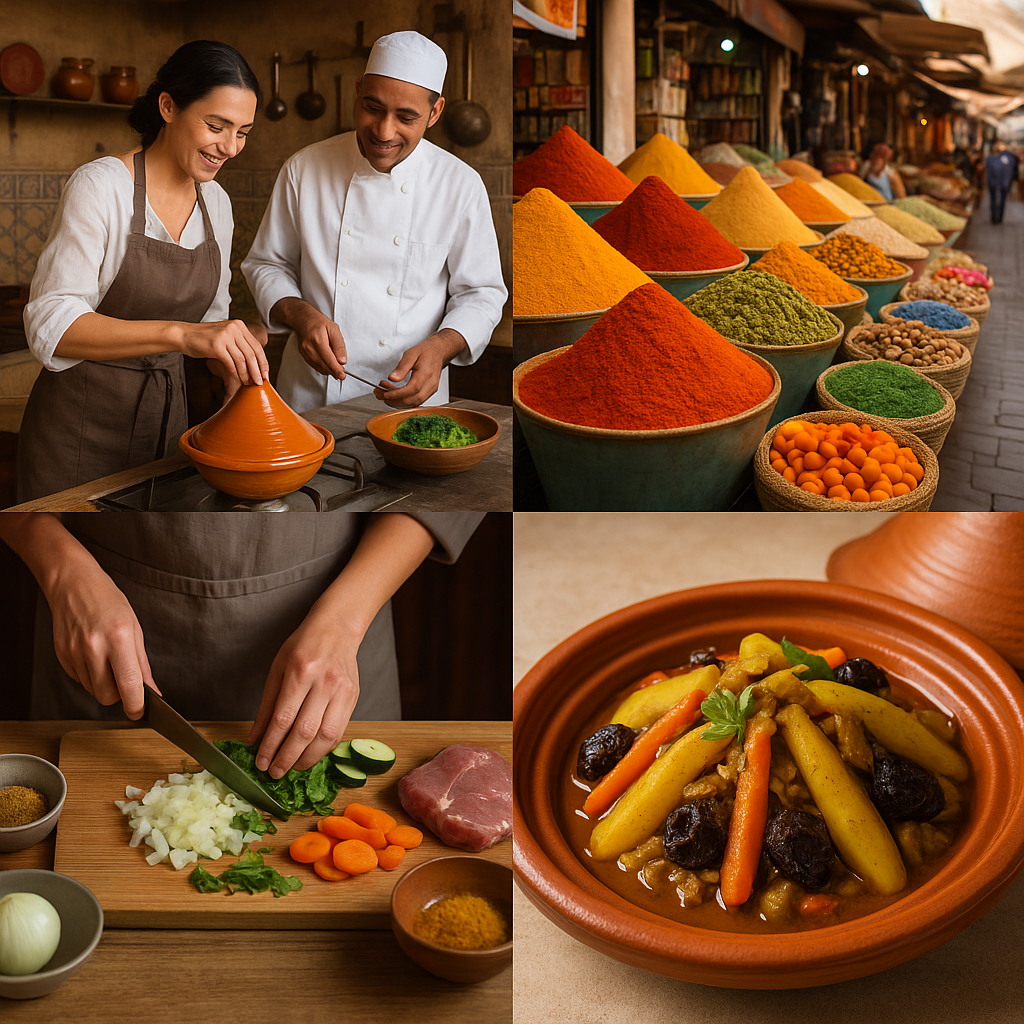
Guided visit to a bustling Moroccan spice market
-
Learn how to select the freshest vegetables and meats
-
Prepare iconic Moroccan dishes: Tagine, Couscous, Moroccan salads
-
Discover the secrets of Moroccan spices like saffron, cumin, ginger, and turmeric
-
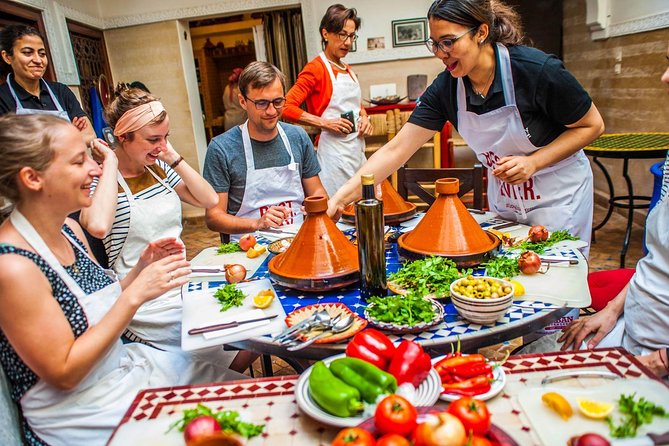
Cook inside a traditional Moroccan riad kitchen
-
Enjoy the meal you prepare yourself
-
Receive a recipe booklet to recreate Moroccan dishes at home
-
Perfect add-on to Morocco luxury tours and cultural trips
Detailed Itinerary: Your Morocco Cooking Experience

What Happens During a Marrakech Cooking Class?
A typical class begins with an introduction to the menu, ingredients, and cooking space. The host may explain the dishes you will prepare and describe their place in Moroccan food culture. If a market visit is included, participants may shop for ingredients before returning to the kitchen. Otherwise, the ingredients may already be prepared and waiting. The class then moves into the practical stages, which can include chopping, seasoning, assembling, cooking, and tasting.
After the food is ready, participants usually sit down to enjoy the meal. Some experiences take place in a riad, home, dedicated cooking school, garden, or countryside setting, and each offers a different atmosphere. The total duration varies according to the menu and whether transportation or shopping is included. Rather than assuming every class follows the same schedule, check the provider’s description and leave enough time before your next activity.
How Long Does a Moroccan Cooking Class Take?
Many cooking experiences last several hours, although the exact duration depends on the dishes, group size, and activities included. A shorter workshop might focus on one recipe, while a longer class may include market shopping, several dishes, and a leisurely meal. Cooking a tagine involves slow preparation, so the host may organize certain steps in advance or teach additional recipes while the main dish cooks.
When planning your day, consider travel time to the meeting point as well as the class itself. Traffic, the layout of the medina, and walking distances can affect your schedule. If you are joining a Marrakech cooking class on the same day as a flight, train, or desert departure, ask the provider for a realistic finishing time. Better still, avoid placing important connections immediately after the class so you can enjoy the experience without rushing.
How Much Does a Marrakech Cooking Class Cost?
Cooking class prices in Marrakech vary according to the location, duration, group size, menu, and services included. A shared class is generally priced per person, while a private experience may have a minimum booking cost or a rate based on the whole group. Experiences that include transportation, market visits, premium ingredients, or exclusive use of a venue may cost more. Because prices change, request a current quote rather than relying on an old online listing.
To compare value, ask what the advertised price covers. Does it include all ingredients, drinks, the meal, recipes, hotel transfers, and taxes? Are there additional charges for children, dietary adaptations, or a private instructor? Also, check the cancellation and rescheduling policy. A class that appears cheaper may not be the best value if essential services cost extra, while a higher-priced experience may be worthwhile if it includes the features you most want.
How to Choose the Right Cooking Class in Marrakech
Start by deciding what kind of experience you want. If you prefer a social atmosphere, a shared group class may be a good choice. If you want more flexibility or personal attention, consider a private session. You should also think about the setting: a riad in the medina may offer a traditional urban atmosphere, while a class outside the city could provide more space and a quieter environment.
Next, review practical details. Ask about the menu, instructor language, group size, accessibility, pickup arrangements, and dietary requirements. Read recent independent reviews where available, paying attention to comments about the teaching style rather than only the final meal. Finally, confirm the booking terms in writing. The right Marrakech cooking class is the one that matches your interests, schedule, and expectations—not simply the one with the most elaborate description.
Group Cooking Classes vs. Private Cooking Classes
A group class can be a welcoming choice for travelers who enjoy meeting people. Participants may share tasks, exchange travel stories, and sit down together after cooking. Because certain costs are shared, a group experience may also be more affordable per person than a private session. However, the instructor’s attention is divided among the group, and the menu or schedule may be fixed.
A private class can offer more flexibility, particularly for families, friends, or travelers with specific dietary needs. Depending on the provider, you may be able to request a preferred dish, adjust the pace, or ask more detailed questions. On the other hand, a private booking often costs more overall. Compare the two options based on what is included, the number of people in your party, and how much individual instruction you want.
Is a Marrakech Cooking Class Suitable for Beginners?
Yes. Many Moroccan cooking classes welcome beginners and do not require previous experience. Instructors usually demonstrate techniques step by step and explain how ingredients are combined. Even if you rarely cook, you can participate in simple tasks such as preparing vegetables, mixing spices, or assembling a dish. The aim is not necessarily to produce a professional restaurant meal, but to learn and enjoy the process.
If you are nervous about your skills, tell the provider before booking and ask whether the class is beginner-friendly. You can also ask how much standing, chopping, or physical activity is involved. More experienced cooks should share their interests too, especially if they hope to learn advanced techniques or regional recipes. This helps the host recommend a suitable format rather than assuming every guest wants the same level of instruction.
Moroccan Cooking Classes for Families
A cooking class can be a rewarding addition to a family trip because it gives children and adults an activity to share. Younger participants may enjoy mixing spices, preparing simple salads, shaping ingredients, or discovering new foods. Meanwhile, parents can introduce children to Moroccan culture in a practical and relaxed setting. Sitting down to eat the finished dishes together can also create a shared memory that goes beyond traditional sightseeing.
Before booking, check the minimum age, child pricing, and level of supervision required. Ask whether the kitchen can provide age-appropriate tasks and whether the menu can accommodate younger eaters. If anyone in the family has allergies, communicate them clearly in advance. Travelers comparing Morocco Family Tours can also ask an itinerary planner to include a cooking class at a convenient point, ideally on a day without a long drive.
Dietary Requirements and Food Allergies
Moroccan cuisine offers a wide variety of vegetables, legumes, grains, herbs, and spices, which can make it possible to adapt some cooking classes for different diets. Vegetarian and vegan menus may be available, and some providers can adjust dishes for guests who avoid certain ingredients. However, availability depends on the kitchen and the planned menu. It is always better to ask before paying than to expect changes on arrival.
For allergies or serious medical dietary needs, explain the issue in detail and ask about ingredients, preparation surfaces, utensils, and cross-contact. For example, nuts, wheat, dairy, or other allergens may be present in a shared kitchen even when they are not part of your chosen dish. A provider should be able to tell you what precautions they can and cannot take. If they cannot accommodate your needs safely, choose another experience.
What to Wear and Bring
Comfortable clothing and closed, practical shoes are useful for a cooking class, especially if you will stand for part of the session or walk through a market. Some providers supply aprons, but it is worth checking in advance. Dress for the season and the location, and remember that temperatures may differ between the street, a shaded courtyard, and an indoor kitchen. If your experience includes time outdoors, bring suitable sun protection.
You may also want a phone or notebook for recording recipes and tips, along with any essential medication or personal items. If the class includes hotel pickup, confirm exactly where the driver can meet you; vehicles may not be able to reach every door in the medina. Carry the provider’s contact details and booking confirmation. Finally, ask permission before photographing your instructor, other participants, or market vendors.
Cooking Etiquette and Cultural Respect
A cooking class is a chance to learn from your host, so approach the experience with curiosity and respect. Listen to instructions, ask questions when you are unsure, and avoid assuming that one recipe represents every Moroccan household. Food traditions differ by region, family, season, and occasion. Your instructor’s version is valuable because it reflects their knowledge and experience, even if you have seen a different recipe elsewhere.
It is also considerate to ask before taking close-up photographs of people or sharing their images online. During a market visit, follow your guide’s advice about where to stand and how to interact with vendors. If a dish or ingredient is unfamiliar, remain open-minded while communicating any dietary limitations honestly. These small gestures can help create a positive exchange between guests, instructors, and the wider community.
How a Cooking Class Supports Local Travel Experiences
A class can connect travelers with cooks, guides, market sellers, and small hospitality businesses. Depending on the provider, ingredients may be purchased locally and the experience may introduce guests to food traditions they would not otherwise encounter. For travelers seeking Authentic Morocco Travel Experiences, learning directly from a host can be more meaningful than simply observing a destination from a distance.
However, authenticity is not something that can be guaranteed by a marketing phrase. Ask who teaches the class, where it takes place, and what participants actually do. If supporting local businesses is important to you, look for clear information about ownership, sourcing, and community relationships. Above all, choose an experience that allows enough time for genuine learning and conversation rather than treating local culture as a quick photo opportunity.
Best Time of Day for a Marrakech Cooking Class
Morning classes can work well if they include market shopping and finish with lunch. They also leave the afternoon free for sightseeing, shopping, or relaxing at your accommodation. An afternoon or evening class may suit travelers who prefer a slower start to the day and want to enjoy the meal as dinner. The best option depends on the provider’s schedule, the season, and your other plans.
During warmer periods, consider the temperature and whether the kitchen or market visit is sheltered. In addition, think about how much you want to eat before the class. A light breakfast may be sensible before a morning session, particularly if a full lunch is included. Ask about the expected finishing time and portion sizes if you are planning another meal or activity later. A little planning can make the experience more comfortable.
Where to Go in Morocco for Food Lovers
If you are deciding Where to Go in Morocco for a food-focused trip, Marrakech is a strong starting point because it combines markets, restaurants, and a range of cooking experiences. Fes, Casablanca, Essaouira, Tangier, and other destinations can also introduce you to different ingredients and regional dishes. Coastal cities may appeal to seafood lovers, while inland itineraries can highlight local produce, bread, slow-cooked dishes, and seasonal specialties.
Rather than trying to taste everything in one city, consider building food experiences into several stops. A guided market walk, family meal, bakery visit, or cooking lesson can add variety to a wider itinerary. Nevertheless, food offerings differ by season and provider, so ask what is available during your travel dates. A well-paced route gives you time to enjoy meals instead of treating them as a quick break between attractions.
Combine a Cooking Class with Marrakech Sightseeing
A Marrakech cooking class pairs naturally with a day of exploring the city. You might spend the morning visiting a garden or historic site, then join an afternoon class and enjoy dinner with your group. Alternatively, take a morning cooking session and use the afternoon to wander through the medina. This balance gives you both a cultural activity and time to experience the city at your own pace.
When planning the day, allow for walking and transfers between locations. The medina can be busy, and some sites require advance reservations or have specific opening hours. If your accommodation is difficult to find, ask for clear directions or arrange a meeting point with the class provider. Most importantly, do not fill every hour. Leaving a little flexibility makes it easier to enjoy the food, conversation, and atmosphere without feeling rushed.
Add a Cooking Class to Marrakech Desert Tours
Many visitors combine Marrakech with the mountains and southern Morocco. If you are considering Marrakech desert tours, a cooking class can be a relaxing activity before or after several days on the road. It offers a different perspective on the country: instead of focusing on landscapes and long-distance travel, you spend time learning about ingredients and everyday food traditions.
When comparing Sahara desert tours from Marrakech, check departure and return times before scheduling your class. Desert itineraries can involve long drives, and unexpected delays are possible. For a more comfortable plan, leave a rest day between the tour and the cooking experience when your schedule allows. Also, remember that a short visit to the rocky Agafay area is different from a longer journey to Sahara dune regions.
Casablanca Desert Tours and a Marrakech Food Stop
Travelers arriving in Casablanca may plan a route that continues through several Moroccan destinations before reaching Marrakech. Depending on the itinerary, Casablanca desert tours may include city visits, mountain landscapes, and an overnight stay near the Sahara. Adding a cooking class in Marrakech at the end of the journey can provide a pleasant contrast to the driving days and an opportunity to reflect on the flavors encountered along the route.
If you are comparing Sahara Tours from Casablanca, ask whether Marrakech is included and how much free time you will have there. Some trips follow a fixed schedule, while private itineraries may allow you to add activities. Confirm whether the cooking class is part of the tour price or a separate booking. You should also check the final arrival time in Marrakech so that the class does not conflict with your transport.
Fes Desert Tours and a Marrakech Cooking Experience
A route from Fes through the Sahara to Marrakech can combine several aspects of Morocco in one journey. Fes desert tours may travel through mountain and valley landscapes before reaching a desert camp, then continue west toward Marrakech. Once you arrive, a cooking class offers a chance to settle into the city and explore Moroccan cuisine in a more hands-on way.
If you are looking at Morocco desert tours from Fes, ask the operator whether the journey ends early enough for an activity on arrival day. In many cases, scheduling the class for the following day may be more relaxing. You can also compare food experiences in Fes and Marrakech rather than assuming they will be identical. Menus and teaching styles vary, so choose according to the dishes and atmosphere that interest you most.
Desert Tours from Tangier and Northern Morocco
For travelers starting in the north, Desert Tours from Tangier can form part of a longer route through Morocco. An itinerary may include destinations such as Chefchaouen and Fes before continuing south, although routes and overnight stops differ. Because the distances are considerable, it is important to choose a schedule that leaves enough time for both travel and sightseeing.
If Marrakech is included later in your trip, ask whether the operator can reserve a cooking class or leave free time for you to book one independently. Alternatively, arrange a food experience earlier in your journey and compare regional flavors as you travel. When reviewing the quote, confirm which meals and activities are included. A clear itinerary will help you understand whether a cooking class fits comfortably into your schedule and budget.
Small Group Morocco Tours with a Culinary Experience
Small Group Morocco Tours can appeal to travelers who want organized transport and a social atmosphere without joining a large group. A cooking class can complement this style of travel because participants work together and share a meal. It may also provide a welcome change from busier sightseeing days. However, group sizes vary, so ask how many people will be on the tour and how many will participate in the class.
When comparing Morocco Small Group Tours, review the itinerary carefully to see whether the cooking experience is included, optional, or unavailable. Ask whether each participant gets hands-on practice and whether dietary requests can be accommodated. Some morocco group tours offer free time instead, allowing you to book your own class. Either approach can work well, provided the timing and meeting point fit the rest of the day.
Authentic Small Group Morocco Tours and Local Food
For travelers seeking Authentic Small Group Morocco Tours, food can be an engaging way to learn about local life. A thoughtful itinerary might include a cooking lesson, a market visit, or a meal prepared by a local host. These experiences can encourage conversation and help visitors understand how ingredients, hospitality, and family traditions shape Moroccan cuisine. They also offer variety alongside historical and natural attractions.
Still, ask for specifics rather than relying only on descriptive language. Find out who leads the activity, how much time is allocated, and whether you will cook or simply observe. Also, check whether the meal takes place in a dedicated school, a guesthouse, or another setting. Clear answers make it easier to choose an experience that matches your expectations and supports the kind of cultural exchange you are looking for.
Tailor Made Morocco Tours for Food Lovers
Tailor made Morocco tours can be useful if food is a central interest rather than an occasional activity. You might request a Marrakech tagine class, time to visit food markets, restaurant recommendations, and stops that showcase regional ingredients. A private itinerary can also be adjusted around dietary needs, mobility requirements, or a preferred travel pace. However, the level of customization depends on the operator and the available services.
When requesting proposals for custom Morocco tours, explain the experiences you value most. Tell the provider whether you prefer hands-on cooking, food history, family-friendly activities, or more independent time. Then ask for a clear list of included meals, guides, transfers, and class fees. Comparing detailed proposals will help you understand the cost of personalization and avoid assuming that every food-related activity is included in the quoted price.
The Best Morocco Tours for a Balanced Itinerary
The best Morocco tours for food lovers are those that balance culinary experiences with the other places and activities you want to enjoy. A trip focused entirely on major landmarks may leave little time for a relaxed cooking class, while an overfilled food itinerary can feel repetitive. Consider mixing one or two memorable culinary activities with city walks, landscape visits, and free time to explore independently.
Also, look beyond the number of destinations listed in the brochure. A shorter route with well-planned stops may offer more meaningful experiences than a long itinerary spent mostly in a vehicle. Ask how much time you will have in Marrakech, whether activities are optional, and what happens if a class is unavailable on your dates. The best choice is the one that suits your interests, budget, and preferred pace.
Morocco Adventure Tours and Cooking Classes
Morocco adventure tours often focus on activities such as hiking, cycling, surfing, or exploring desert landscapes. A cooking class can complement these experiences by introducing a different side of the country. After several active days, preparing a meal in a relaxed setting can provide time to rest, talk with fellow travelers, and learn a skill that does not require specialized outdoor equipment.
If you are combining adventure activities with a food experience, pay attention to timing and physical demands. A long hike followed immediately by an evening class may be enjoyable for some travelers but tiring for others. Ask about transfers, meal times, and the amount of standing involved. A balanced schedule helps you enjoy both the active and cultural parts of the trip without feeling that every day must be packed.
Add a Cooking Class to a 3 Weeks in Morocco Itinerary
A 3 weeks in Morocco itinerary gives you room to include a cooking class without sacrificing major destinations. One possible route could begin in Casablanca or Rabat, continue through northern Morocco and Fes, then head toward the Sahara before reaching Marrakech. After a few days in the city, you might continue to the Atlas Mountains or the Atlantic coast. The exact order should depend on your flights, interests, and travel pace.
A cooking class can fit especially well near the middle or end of a longer trip. By then, you may have tasted several Moroccan dishes and developed questions about the ingredients and techniques. In addition, a half-day activity can provide a gentler break between longer journeys. Ask your tour planner or accommodation for options, but compare providers independently and confirm the menu and inclusions before booking.
A Simple Moroccan Tagine Recipe to Practice at Home
To make a basic vegetable tagine, begin with a selection of vegetables such as onions, carrots, potatoes, zucchini, and tomatoes. Add olive oil, garlic, and spices such as ginger, turmeric, cumin, and black pepper to taste. Arrange the vegetables in a tagine pot or heavy lidded pan, add a modest amount of water or suitable stock, and cook gently until tender. The exact quantities and cooking time will depend on the size of your vegetables and the vessel you use.
Check the dish occasionally and add a little more liquid if needed. Before serving, taste and adjust the seasoning, then finish with fresh herbs if you like. You can serve the tagine with bread or another accompaniment of your choice. This is a flexible home-style starting point rather than a single definitive Moroccan recipe. During your Marrakech cooking class, ask your instructor how their version differs and which seasonal ingredients they recommend.
1. Hotel Pick-Up & Welcome by Your Chef
Your culinary adventure begins with a smooth hotel pick-up from your Riad or hotel in Marrakech—a standard service in many Morocco travel packages.
Your chef introduces the experience and guides you toward the Medina, the beating heart of Marrakech tourism.
2. Spice Market Tour – The Flavors of Morocco
Walking through the spice souk is one of the most exciting things to do in Morocco.
You will learn:
-
How to choose authentic Moroccan saffron
-
The uses of cumin, turmeric, ginger, and ras el hanout
-
The importance of spices in Moroccan gastronomy
This sensory journey reveals why Moroccan food is globally celebrated.
3. Select Fresh Moroccan Ingredients
You’ll explore the vegetable market—an essential part of local life in Marrakech.
Here, you’ll learn to:
-
Select seasonal produce
-
Identify high-quality Moroccan herbs
-
Choose meats for your Tagine (optional)
-
Interact with Marrakech’s friendly vendors
This is a culturally rich activity that complements any Morocco cultural tour.
4. Cook Inside a Traditional Riad Kitchen
Inside a charming Moroccan kitchen—often located in a riad—you will find:
-
Traditional cooking tools
-
Clean workstations
-
Aprons and chef guidance
The chef explains the cultural importance of food in Moroccan society and why sharing meals is a fundamental Moroccan tradition.
5. Hands-On Preparation: Moroccan Techniques
You’ll prepare your meal using authentic Moroccan cooking techniques:
-
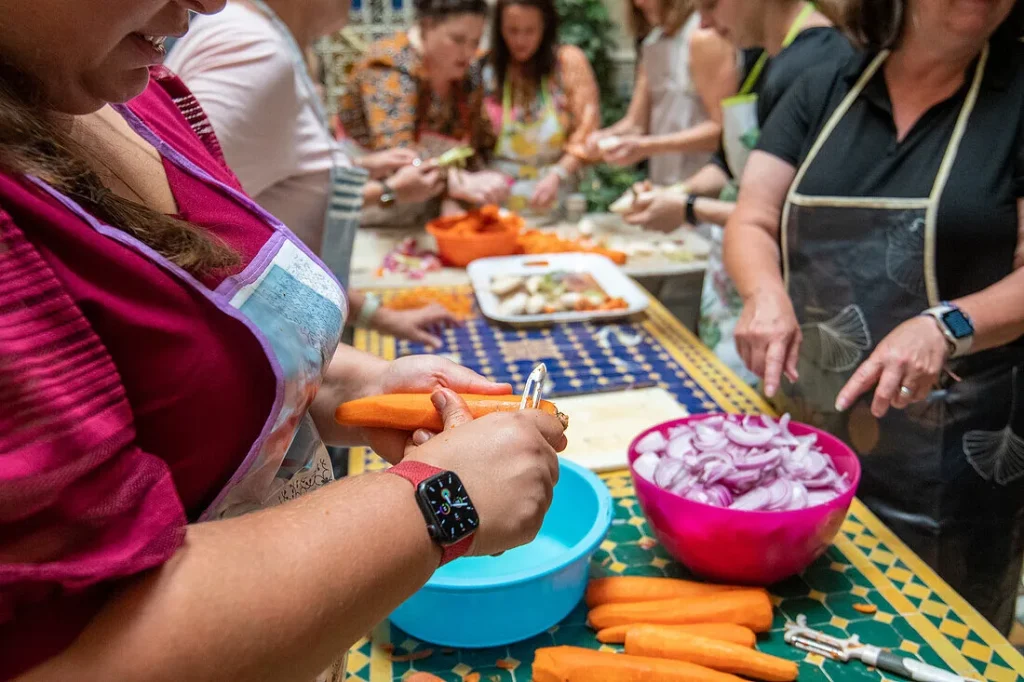
Chop vegetables Moroccan-style
-
Blend spices to create charmoula marinade
-
Learn knife and preparation skills used in everyday Moroccan homes
-
Build the flavor base of your Tagine
This hands-on work is a highlight for travelers seeking authentic Morocco experiences.
6. The Art of Tagine Cooking
The Tagine is the symbol of Moroccan cuisine.
You’ll learn:
-
How to layer ingredients correctly
-
Why Tagine pots have a conical lid
-
How slow cooking transforms flavors
-
Tips to recreate Moroccan Tagine at home
This makes your cooking class one of the best culinary experiences in Morocco.
7. Moroccan Mint Tea Break
Mint tea—often called “Moroccan whisky”—is a cultural icon of Morocco hospitality.
During this break, you will learn:
-
The meaning behind serving mint tea
-
How to brew authentic Moroccan tea
-
Other Moroccan dishes: Couscous, Pastilla, Harira
This adds a cultural touch to your Morocco food tour.
8. Enjoy the Moroccan Meal You Created
Now comes the most rewarding moment.
You will savor:
-
Your freshly cooked Tagine
-
Seasonal Moroccan salads
-
Hot Moroccan bread
It’s a feast of rich aroma and flavor.
You also receive a recipe booklet, a beloved souvenir among travelers visiting Morocco.
What’s Included in This Morocco Cooking Class
Included
-
Hotel pick-up & drop-off
-
Medina & spice market tour
-
All cooking ingredients
-
Professional Moroccan chef
-
Three-course meal
-
Recipe book
Not Included
-
Tips
-
Souvenirs
-
Alcohol
-
Extra recipe books
-
Travel insurance
Frequently Asked Questions: Marrakech Cooking Class
What Moroccan dishes will we cook?
Common dishes include:
-
Moroccan chicken or vegetable Tagine
-
Fresh Moroccan salads
-
Traditional Moroccan bread
A perfect introduction to Moroccan cuisine.
Do I need prior cooking experience?
No experience is needed. This activity is ideal for:
-
Beginners
-
Families
-
Food lovers
-
Morocco first-time travelers
Is vegetarian Moroccan cooking available?
Yes! Moroccan cuisine is rich in vegetarian options.
Is the market visit included?
Yes. It’s a key part of the experience and lasts around 45 minutes.
Is this a luxury Morocco experience?
Absolutely. Clean facilities, private transport, and expert chefs make it suitable for any Morocco luxury tour.

Final Thoughts: A Must-Do Experience in Morocco
If you’re planning to visit Morocco or exploring the best things to do in Marrakech, a cooking class is unforgettable. It mixes culture, food, tradition, and authentic local interactions—making it a top highlight in any Morocco travel plan.
This Marrakech Cooking Class is more than a lesson—it’s a cultural immersion and a delicious memory you’ll take home forever.