
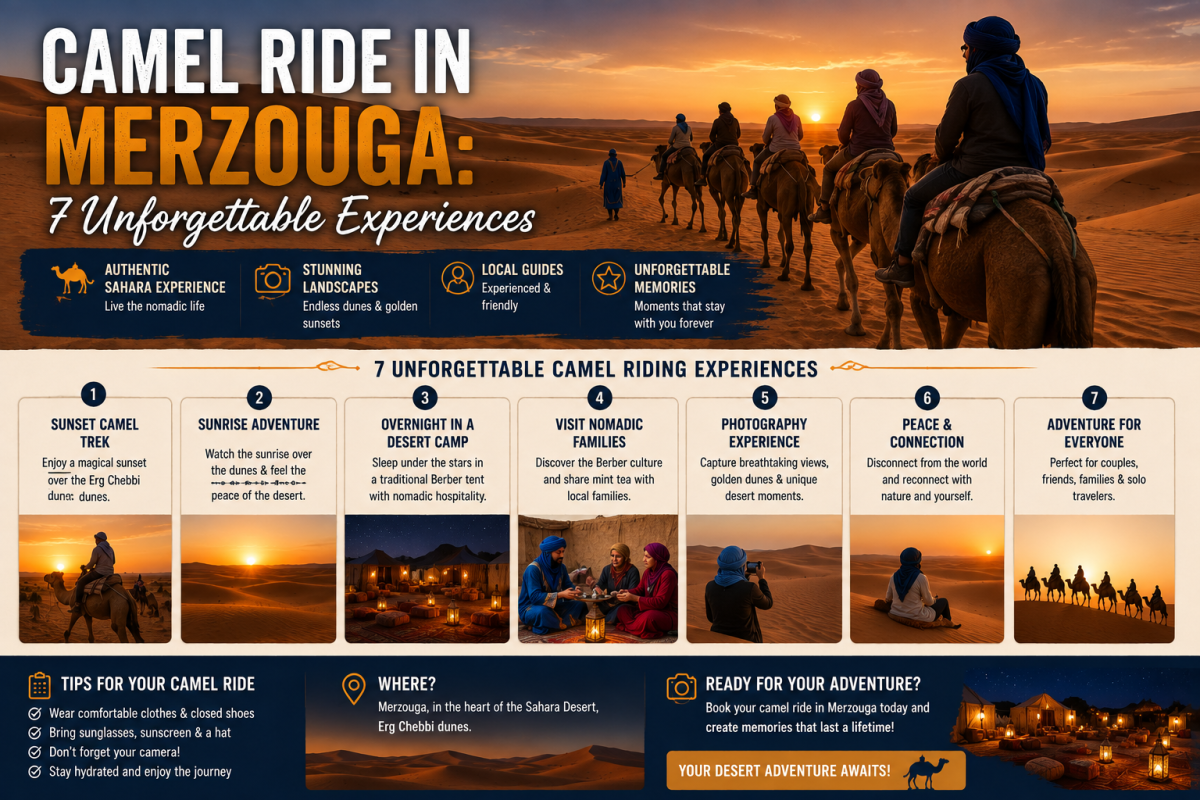
7 Unforgettable Camel Ride in Merzouga Experiences in the Sahara
A camel ride in Merzouga is one of the most memorable ways to experience Morocco’s Sahara. On the edge of the Erg Chebbi dunes, camel trekking takes you away from paved roads and into a landscape of sweeping sand dunes, changing colors, quiet horizons, and remarkable sunrise and sunset views.
Merzouga works particularly well for first-time desert visitors because a camel trek can be as simple as a short sunset ride or as immersive as an overnight journey to a Sahara camp. Couples, families, solo travelers, and groups can combine the experience with Moroccan meals, traditional music, photography, stargazing, 4×4 excursions, and longer desert itineraries.
This guide covers seven of the best Merzouga camel-riding experiences, along with the best time to visit, what to wear, safety considerations, desert camping, routes from Marrakech and Fes, and practical advice for planning your trip.
Why Choose Merzouga for a Sahara Camel Ride?
Merzouga is a small settlement in southeastern Morocco beside Erg Chebbi, one of the country’s best-known dune areas. Its location gives travelers direct access to the sand, making it a practical base for camel trekking and overnight desert camps.
The dunes of Erg Chebbi change dramatically with the light. During the day, the sand can appear golden or orange; near sunrise and sunset, longer shadows emphasize the ridges and curves of the dunes. Riding slowly through this landscape offers a very different experience from seeing it from a vehicle.
Merzouga can also be incorporated into larger Moroccan itineraries. Travelers starting in Marrakech can join a Morocco desert tour from Marrakech, while a Fes to Marrakech desert tour in 3 days connects the Sahara with two major Moroccan cities. Visitors with more time can consider a 10-day Morocco tour from Casablanca.
7 Memorable Camel Ride in Merzouga Experiences
1. Ride Across the Erg Chebbi Dunes
The classic experience is a guided camel trek into Erg Chebbi. Before departure, your guide normally explains how to mount, sit comfortably, and dismount. The camel’s movement can feel unfamiliar at first, particularly when it stands up or kneels, but most beginners adjust quickly.
The pace is generally calm, giving you time to appreciate the scale and silence of the landscape. Travelers looking specifically for this experience can also explore a Camel Riding Tour Merzouga to the Erg Chebbi Dunes.
2. Watch Sunset from the Dunes
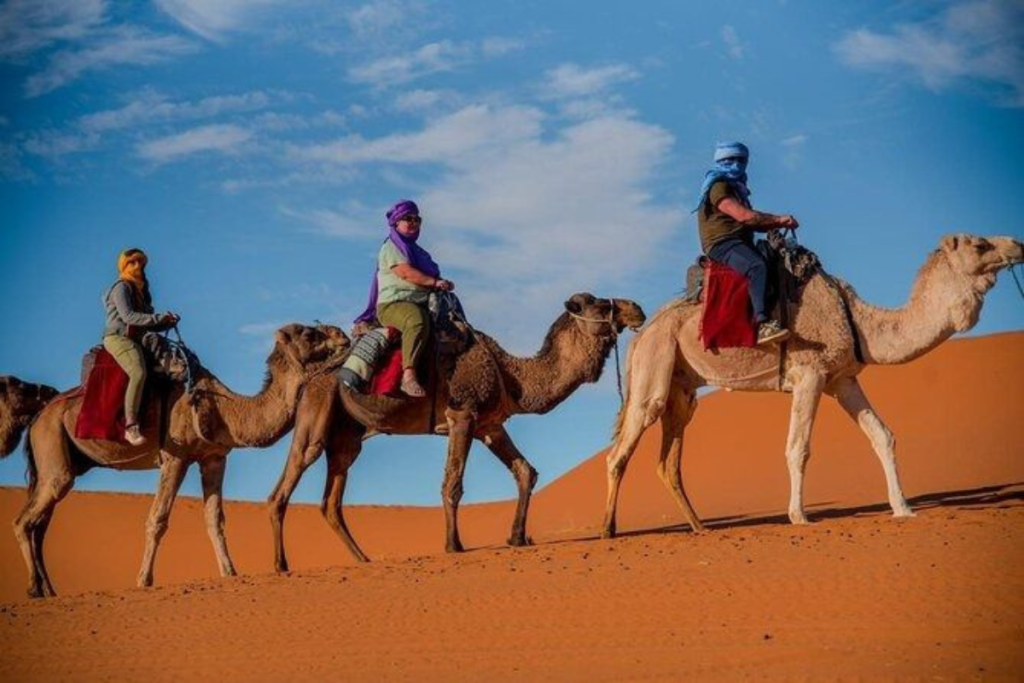
A sunset ride is one of the most popular choices in Merzouga. As the sun lowers, the sand develops deeper colors and stronger shadows. Guides may stop at a suitable dune so travelers can walk to a viewpoint, take photographs, and watch the light change across Erg Chebbi.
Sunset is particularly appealing for photographers because camel caravans, dune ridges, and long shadows can create striking compositions. Keep cameras and phones protected from blowing sand, and avoid changing lenses unnecessarily when conditions are windy.
3. Experience a Sunrise Camel Trek
Sunrise provides a different atmosphere. Temperatures are often cooler than later in the day, and the dunes can be especially peaceful before daytime activities begin. Depending on your itinerary, you might ride before sunrise or walk from your desert camp to an elevated dune viewpoint.
The first light can reveal subtle textures in the sand that disappear under stronger midday sunlight. If photography matters to you, ask your guide when you need to leave camp to reach a suitable viewpoint before sunrise.
4. Spend a Night at a Sahara Desert Camp
An overnight camel trek extends the experience beyond a short excursion. Guests typically travel into the dunes, arrive at camp, have dinner, and spend the evening in the desert before watching the sunrise the following morning.
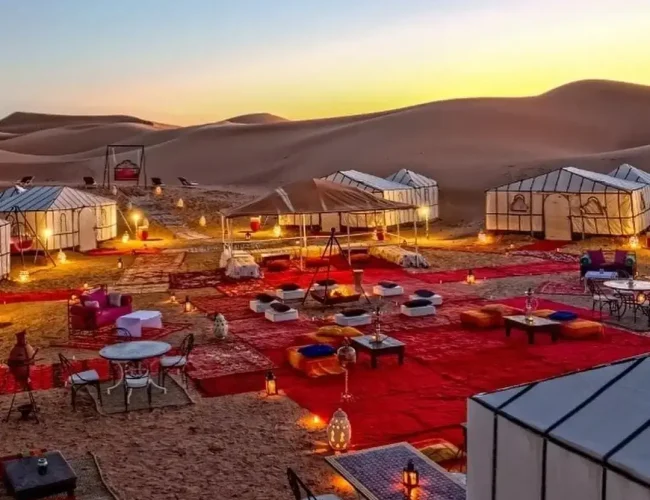
Accommodation varies considerably. Traditional-style camps emphasize a simpler desert atmosphere, while luxury camps may offer comfortable beds, private bathrooms, electricity, hot water, and more elaborate furnishings. Facilities differ by camp, so confirm exactly what your booking includes rather than assuming every “luxury” camp provides the same amenities.
5. Dine and Stargaze in the Sahara
Food and the evening atmosphere are important parts of an overnight stay. Depending on the camp, meals may include Moroccan salads, tagines, couscous, bread, and tea. Some camps also arrange traditional music after dinner.
Merzouga’s desert setting can provide impressive nighttime skies when weather and moonlight conditions cooperate. After the daytime visitors have left the dunes, simply sitting outside the camp can become one of the quietest and most memorable parts of the experience. Morocco’s official tourism information also provides useful background on the wider Errachidia, Midelt, and Merzouga region.
6. Meet Local Guides and Discover Desert Culture
A camel trek can be more meaningful when there is time to learn about the people and communities of southeastern Morocco. Local guides may share information about regional traditions, music, food, textiles, tea customs, and the practical realities of living around the Sahara.
Travelers often use the term “Berber,” while many Indigenous people of Morocco identify as Amazigh. Experiences vary between tours, so look for respectful cultural encounters rather than activities that treat local traditions merely as entertainment.
A knowledgeable guide can also help identify good photography locations, explain desert conditions, and advise when weather or heat makes an activity unsuitable.
7. Combine Camel Trekking with a 4×4 Desert Adventure
Camel trekking is intentionally slow. Travelers who would also like to explore a wider area can complement it with a 4×4 off-roading tour in Merzouga. A vehicle excursion and camel ride offer contrasting perspectives on the desert and can work well together in a multi-day stay.
Visitors planning a broader trip can also build Merzouga into a dedicated Sahara Desert Adventure in Morocco. Travelers interested in landscapes, rocks, and landforms may prefer the more specialized Morocco Geological Tours – 7 Days.
How Long Does Camel Trekking in Merzouga Last?
The length of a camel trek depends on the experience you book. Short rides commonly take around one to two hours, while sunset and sunrise outings are planned around the light rather than simply the riding time. Overnight excursions add a stay at a desert camp, and longer expeditions may spend substantially more time away from Merzouga.
When choosing a tour, consider more than the number of riding hours. Ask how much time is spent at viewpoints, whether camp transportation is available for travelers who do not want to ride both ways, and what happens if weather conditions affect the planned trek.
Best Time for a Camel Ride in Merzouga
Spring and autumn are generally among the most comfortable seasons for outdoor activities around Merzouga. March through May and September through November are popular periods because conditions are typically more moderate than at the height of summer.
Summer can be extremely hot, particularly during the middle of the day. If you travel between June and August, activities are often more comfortable around sunrise or toward sunset, subject to local conditions and your guide’s advice. Winter can be pleasant during the daytime, but nights in the desert may feel surprisingly cold.
Weather varies from year to year and even from one day to another. Wind can also affect comfort and visibility, so check the forecast shortly before your excursion and follow local guidance rather than relying only on seasonal averages.
Merzouga Desert Weather: What to Wear
The desert’s dry environment can produce a noticeable difference between daytime and nighttime comfort. Dressing in layers is usually more practical than relying on a single outfit.
Lightweight, breathable clothing helps during warm conditions, while loose long sleeves and trousers offer additional protection from sun and blowing sand. Bring a warmer layer for evenings and early mornings. Sunglasses, sunscreen, a hat, and a scarf or bandana are also useful.
Closed, comfortable shoes are practical because a camel tour may involve walking on sand before, during, or after the ride. Hydration is equally important: carry sufficient drinking water and follow your guide’s recommendations, especially in hot weather.
What to Pack for a Merzouga Camel Trek
Space can be limited on camel excursions, particularly when luggage needs to be transported to camp. Leave large suitcases at your hotel, vehicle, or another designated luggage area when your operator provides secure storage, and carry only what you need in the dunes.
- High-SPF sunscreen
- UV-protection sunglasses
- A sun hat
- A scarf or bandana for wind and sand
- Lightweight, breathable clothing
- A warm layer for cooler nights and mornings
- Comfortable closed-toe walking shoes
- A refillable water bottle
- A camera or smartphone
- A portable charger or power bank
- A small first-aid kit and personal medication
- Travel-sized toiletries for overnight stays
Camel Ride Safety and Comfort Tips
Listen to your guide before mounting. Camels rise and kneel in stages, so the moments when the animal stands up and sits down can require more attention than the ride itself. Hold the recommended grip, remain balanced, and wait until your guide tells you it is safe to mount or dismount.
Tell your guide promptly if the saddle feels uncomfortable or if you develop pain, dizziness, or other symptoms. Travelers with mobility limitations, back or joint problems, pregnancy, or relevant medical conditions should consider whether camel riding is appropriate for them and discuss accessibility or vehicle alternatives with the operator before booking.
Animal welfare also matters. Choose operators that appear to provide appropriate handling, rest, food, water, and care for their camels, and avoid activities where animals appear injured, distressed, or overloaded.
Traditional Desert Camp or Luxury Glamping?
Traditional-style desert camps and luxury glamping serve different travel preferences. Simpler camps can provide a relaxed atmosphere centered on dinner, music, and the surrounding dunes. Luxury camps prioritize additional privacy and comfort and may provide en-suite facilities and upgraded bedding.
Neither label is completely standardized, so compare actual facilities. Ask about private bathrooms, showers, electricity, heating or cooling where relevant, meal arrangements, luggage transportation, and whether the camp is situated among or near the dunes.
Private desert travel can be particularly appealing to couples planning a honeymoon in Morocco or visitors interested in more customized VIP Morocco Tours.
How to Get from Marrakech to Merzouga
Many travelers begin in Marrakech. Because Merzouga is a substantial journey from the city, it is better suited to a multi-day itinerary than a conventional day trip. Organized Marrakech Desert Tours combine transportation with stops in the Atlas Mountains and southeastern Morocco.
A popular option is a 3-day tour from Marrakech to Merzouga. The trip commonly crosses the High Atlas Mountains and continues through historic settlements, valleys, and gorges before reaching the desert.
Travelers with more time can choose 5-day Marrakech desert tours, allowing a slower pace and additional opportunities to explore communities and landscapes along the route. The journey then becomes an important part of the trip rather than simply transportation to Erg Chebbi.
Highlights Along the Marrakech–Merzouga Route
After leaving Marrakesh, the route climbs through the High Atlas before continuing toward southern Morocco. Mountain viewpoints and villages create a dramatic contrast with the Sahara landscape at the end of the journey.
Aït Ben Haddou is one of the best-known stops. This historic fortified settlement is a UNESCO World Heritage Site and has been used as a filming location. Travelers who cannot continue all the way to Merzouga can instead consider a day trip from Marrakech to Ait Ben Haddou and Ouarzazate.
From Ouarzazate, desert itineraries commonly continue through valleys and toward Tinghir and Todra Gorge before approaching Merzouga. As the route progresses eastward, the scenery gradually becomes more arid until the dunes of Erg Chebbi come into view.
Reaching Merzouga from Fes, Casablanca, and Tangier
Merzouga is not limited to Marrakech-based itineraries. Travelers starting in Fes can browse Fes Tours that connect the city with southeastern Morocco. Dedicated Tours From Fes provide additional itinerary choices, while the site’s Fes Desert Tours focus specifically on journeys toward the desert.
One option for travelers continuing across Morocco is a Fes to Marrakech desert tour in 5 days. With more time than a rapid point-to-point transfer, this format provides room for Sahara activities and sightseeing between the imperial cities. Visitors spending additional time in northern Morocco can also add a day trip from Fes to Chefchaouen.
From Casablanca, travelers can compare Morocco Tours From Casablanca with broader Tours From Casablanca. Dedicated Casablanca Desert Tours are useful when Erg Chebbi is a central goal, while a day trip from Casablanca to Marrakech is intended for travelers whose schedule does not allow a full Sahara journey.
A longer route can connect Casablanca, Rabat, Marrakech, the Atlas Mountains, Merzouga, and Fes. This is where a longer itinerary such as a 10 Days Tour From Casablanca can reduce the pressure to rush between destinations.
Northern arrivals can use Tangier Tours or explore dedicated Tours From Tangier. Another existing selection of Tours From Tangier can connect Tangier with Chefchaouen, Fes, the Sahara, and Marrakech when enough time is available.
Shorter Regional Options Around Merzouga
If you are already staying near Erfoud, reaching the Sahara is much easier than traveling from Marrakech or Casablanca. A Day Trip from Erfoud to Merzouga Desert can be useful for travelers based in the surrounding region who want to experience Erg Chebbi without redesigning their entire Morocco itinerary.
The same excursion is also relevant for travelers researching Merzouga Desert Tours from nearby towns rather than long-distance departures from Morocco’s imperial cities.
Other Activities to Combine with a Merzouga Camel Ride
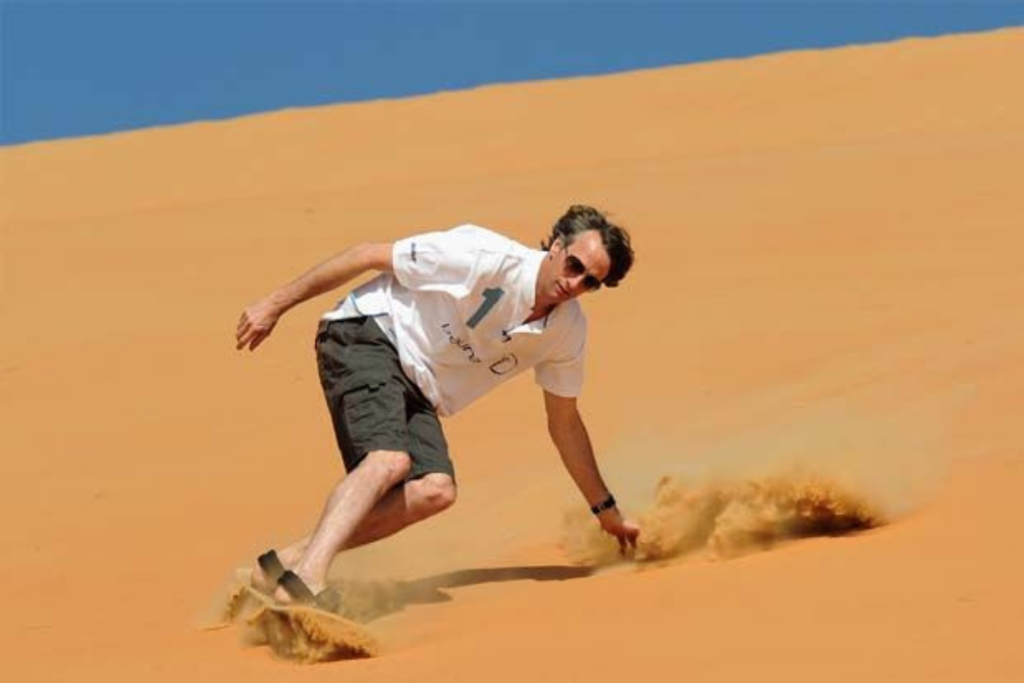
A camel ride does not need to be your only desert activity. In addition to 4×4 exploration, some visitors choose quad experiences in permitted areas, sandboarding where available, visits to nearby communities, or additional time simply walking and photographing the dunes.
If you are using Marrakech as a base before or after the Sahara, there are many contrasting activities. A Marrakech Hot Air Balloon Flight offers aerial views in the Marrakech region, while a Marrakech Cooking Class focuses on Moroccan food and culinary traditions.

Day Trips from Marrakech Before or After the Sahara
Travelers who have extra days in Marrakech can use the city as a base for regional excursions. The selection of Day Trips from Marrakech includes landscapes and towns that are very different from Erg Chebbi.
For mountain scenery and villages, consider a Day Trip from Marrakech to Ourika Valley. Another option is a Day Trip from Marrakech to Ouzoud Waterfalls. Travelers more interested in the Atlantic coast can visit Essaouira on a Day Trip from Marrakech to Essaouira.
Agafay, near Marrakech, also offers an arid landscape and outdoor activities. It should not, however, be confused with the Sahara or Erg Chebbi: travelers specifically seeking large golden sand dunes should allow enough time to reach Merzouga.
Private, Luxury, Family, and Special-Interest Morocco Trips
Private tours are useful when travelers want control over departure times, sightseeing stops, accommodation categories, and the pace of the journey. This flexibility can work especially well for couples, families, photographers, and small groups who do not want to follow a fixed group itinerary.
Special-interest travelers can also integrate Merzouga into a wider journey. For example, wellness-focused visitors researching Yoga retreats in Morocco may combine time in quieter destinations with a desert stay, while educational groups can consider Morocco Student Tours.
When comparing private and group trips, look beyond the headline itinerary. Check transportation, accommodation, meals, guide services, camel trekking, camp type, luggage arrangements, and the amount of free time included.
Recommended Tours from Marrakech
Different trip lengths suit different schedules. Short tours prioritize the highlights, whereas longer itineraries provide more time for cultural stops, landscapes, and rest between driving days.
- 2 Days Tour From Marrakech to Zagora Desert
- 3 Days From Marrakech To Merzouga
- 3-Day Tour From Marrakech to Fes
- 4 Days Tour From Marrakech to Fes
- 5 Days Tour From Marrakech to Fes
- 6 Days Tour From Marrakech
- 8 Days Tour From Marrakech
- 10 Days Tour From Marrakech
- 12 Days Tour From Marrakech
- 14 Days Tour From Marrakech
- 15 Days Tour From Marrakech
Choosing the Right Morocco Desert Itinerary
The most important consideration is how much time you actually have. A three-day itinerary from Marrakech is possible and popular, but it involves substantial overland travel. A longer trip makes it easier to spend meaningful time at mountain passes, kasbahs, valleys, gorges, villages, and the desert itself.
Travelers moving between Fes and Marrakech can use the desert as the centerpiece of the journey rather than returning to their starting city. Those arriving in Casablanca or Tangier should generally allow additional days if they want to combine several major Moroccan destinations with Erg Chebbi.
Morocco’s imperial-city routes can include destinations such as Fez and Meknes, while longer nationwide itineraries can extend much farther south. Dakhla, for example, is a separate Atlantic destination in southern Morocco and should be planned as part of a much broader journey rather than treated as a nearby extension of Merzouga.
Sunrise and Sunset Photography Tips
Sunrise and sunset are usually the most visually dramatic periods on Erg Chebbi because low-angle light highlights the shapes of the dunes. A wide-angle lens is useful for showing the scale of the landscape, while a longer focal length can isolate dune patterns or camel silhouettes.
Keep your camera closed or covered when wind is carrying sand. Bring charged batteries, sufficient storage, and a power bank if you will be away from reliable electricity. When possible, avoid putting equipment directly on the sand.
During a sunset Camel Ride in Merzouga, ask the guide about stopping at a safe elevated viewpoint. Local guides generally understand where the light will fall and how much time is required to return to camp.
Responsible Tourism in Erg Chebbi
The dunes and surrounding desert are sensitive environments. Carry your waste out, avoid leaving plastic or food packaging in the sand, and follow instructions about areas that should not be driven across. Responsible vehicle and quad use is particularly important because motorized recreation can have a greater impact than walking or camel trekking.
Supporting locally operated accommodation, guides, restaurants, craftspeople, and other services can help tourism spending remain in the region. Respectful interaction with local communities also means asking before photographing people and treating homes, customs, and cultural practices with consideration.
Responsible camel tourism includes animal welfare. Observe how animals are handled and choose providers that prioritize appropriate workloads, rest, hydration, feeding, and veterinary care.
Planning Your Morocco Adventure
Before booking, consider your dates, overall travel time, budget, preferred accommodation, tolerance for long driving days, and the activities that matter most to you. Confirm what is included and excluded, particularly camp facilities and transportation arrangements.
At Planning To Morocco, itineraries can be organized around combinations of cities, food, mountains, culture, photography, and Sahara experiences. The most comfortable itinerary is not necessarily the one that covers the most places; allowing enough time to enjoy each stop often creates a better trip.
Frequently Asked Questions About Camel Rides in Merzouga
How long does a camel ride in Merzouga last?
Short camel rides commonly last around one to two hours. Other options include sunrise and sunset excursions, overnight camel treks, and longer desert experiences. Exact riding and activity times depend on the tour.
Do I need previous camel-riding experience?
No previous experience is normally required for standard guided excursions. Your guide should explain how to mount, sit, and dismount before the trek begins.
Is camel trekking in Merzouga safe?
Guided camel trekking is a popular activity, but no outdoor activity is risk-free. Follow your guide’s instructions and tell the operator beforehand about mobility issues or health conditions that could make riding difficult.
What should I wear for camel trekking?
Wear breathable clothing that protects you from the sun, comfortable trousers, sturdy closed shoes, sunglasses, sunscreen, and a hat or scarf. Pack an additional warm layer for cooler evenings and mornings.
When is the best time for a camel ride in Merzouga?
Spring and autumn are generally the most comfortable periods, with March to May and September to November commonly favored for outdoor activities. Summer can be intensely hot, while winter nights can be cold.
Is sunset or sunrise better for a camel ride?
Both are worthwhile. Sunset usually provides warm colors and dramatic shadows, while sunrise tends to offer cooler temperatures and a quieter atmosphere. Overnight guests may be able to experience both.
Can I sleep overnight in the Sahara?
Yes. Merzouga offers overnight desert camps ranging from simpler traditional-style accommodation to luxury glamping. Check the exact facilities because amenities vary considerably between camps.
Can children take a camel ride?
Families commonly visit Merzouga, but suitability depends on a child’s age, comfort, the individual operator’s policy, and current conditions. Ask the tour provider about child arrangements and alternatives before booking.
Can I combine camel trekking with other desert activities?
Yes. Common combinations include camping, sunrise and sunset photography, 4×4 excursions, cultural experiences, and other activities offered locally. Avoid overloading a short itinerary, particularly during hot weather.
What is the best route from Marrakech to Merzouga?
Multi-day tours generally cross the High Atlas and can include Aït Ben Haddou, Ouarzazate, valleys, and Todra Gorge before reaching Merzouga. Because the journey is long, spreading it across several days makes sightseeing more practical.
Can I travel from Fes to Marrakech through Merzouga?
Yes. This is a popular way to avoid backtracking while combining both cities with the Sahara. Longer itineraries provide more time for the desert and attractions along the route.
Are private Morocco desert tours available?
Yes. Private tours can allow more flexibility with departure times, sightseeing stops, accommodation, desert activities, and itinerary length, making them useful for couples, families, photographers, and private groups.
Conclusion: Is a Camel Ride in Merzouga Worth It?
For travelers who want to experience Morocco’s great sand dunes rather than simply visit an arid landscape, Merzouga is one of the country’s most compelling destinations. A camel trek combines the slow rhythm of desert travel with Erg Chebbi’s scenery, and an overnight stay adds sunset, dinner, stargazing, and sunrise to the experience.
The key is choosing an itinerary that matches your available time. A short 3 Days Tour From Marrakech To Merzouga covers the essential route, while longer journeys provide more breathing room. Merzouga can also form part of a Fes-to-Marrakech trip, a longer Casablanca itinerary, or a customized private journey.
Give the Sahara enough time rather than treating it as a quick photo stop. Walk on the dunes, listen to your guide, experience the changing light, learn about the region’s communities, and enjoy the Dunes of Erg Chebbi at the unhurried pace that makes a Merzouga camel ride so memorable.